The Federal Court set aside an LMIA Work Permit Refusal Over Career Change on November 13, 2026, finding that the visa officer did not adequately address the applicant’s administrative work experience or her evidence that she would leave Canada after her authorized stay. The application must be reconsidered by a different IRCC decision-maker.

Case Summary
- Case & citation: Patel v. Canada (Citizenship and Immigration), 2026 FC 1398; Court file IMM-9282-25.
- Decision date & judge: November 13, 2026, by Justice Benoit M. Duchesne of the Federal Court.
- Issue: The Court reviewed the refusal of an LMIA-supported fixed-term work permit application, including findings on the applicant’s ability to perform the proposed job and leave Canada.
- Outcome: Judicial review was granted, the March 24, 2025 refusal was set aside, and the work permit application was returned for redetermination by an uninvolved IRCC officer or agent.
LMIA Work Permit Refusal Over Career Change
The applicant, an Indian citizen, held science degrees and had previously worked in science-related roles. She later moved into administrative work, explaining that chemical hazards and the physical demands of her earlier field were no longer sustainable for her and her family.
Her work permit application was supported by a positive Labour Market Impact Assessment for a three-year Administrative Assistant position in Calgary. The application included reference letters for her administrative employment in India, an explanation of her career change and evidence concerning her family and financial ties to India.
The visa officer refused the application under paragraph 200(3)(a) of the Immigration and Refugee Protection Regulations, finding that the applicant had not shown she could adequately perform the proposed work. The officer also was not satisfied that she would leave Canada at the end of her authorized stay.
Why the refusal was unreasonable
Justice Duchesne applied the reasonableness standard. The Court noted that work permit applicants bear the onus of establishing that they meet the requirements for a permit, including satisfying the officer that they will leave Canada at the end of their authorized stay and that there are no reasonable grounds to believe they cannot perform the work sought.
However, the Court found that the officer did not explain why the applicant’s science education made her unable to carry out administrative duties despite her years of administrative work experience and her explanation for changing careers. The reasons did not analyze whether she could perform the duties offered by the Canadian employer or explain why her past administrative roles were insufficient.
The Court held that this lack of engagement with the record was a failure of responsive justification. It rendered the finding on the applicant’s ability to perform the proposed work unreasonable.
The Court also found the temporary-residence finding unreasonable. The officer’s conclusion that the applicant would not leave Canada was conclusory, without an assessment of the factors that could encourage her to remain in Canada and those that could draw her back to India. The Court noted that the officer did not explain how the applicant’s family, financial and other supporting evidence had been weighed.
What the Federal Court ordered
The Court granted judicial review and set aside the March 24, 2025 decision. It ordered a new assessment by another IRCC officer or agent who had not previously been involved in the matter.
The applicant must also receive a reasonable opportunity before redetermination to provide updated documents and submissions, including information concerning the continued availability of the Canadian job opportunity or an updated or changed version of it. No costs were ordered.
Practical Implications for Lawyers and RCICs
The Court’s findings turned on the particular record: the applicant had provided evidence of several years of administrative employment and an explanation for moving away from science-based work, yet the officer did not explain why that evidence failed to establish her ability to perform the offered role (paras 31–33). For a comparable record, this suggests that an officer’s reliance on an apparent mismatch between education and proposed employment must be reconciled with directly relevant work experience.
The decision also shows that a bare conclusion on an applicant’s departure from Canada may be insufficient where the file contains evidence relevant to family and financial ties and the reasons do not show how those factors were assessed (para 34).
Source: Federal Court Decisions
Maplevisa provides Canadian immigration news and information for general informational purposes only. Content is not legal or immigration advice and should not be relied upon as a substitute for advice based on your individual circumstances. Immigration laws, policies, programs, and procedures may change. Where applicable, readers should consult the relevant official government or legal source for current information.
Disclaimer
Maplevisa provides Canadian immigration news and information for general informational purposes only. Content is not legal or immigration advice and should not be relied upon as a substitute for advice based on your individual circumstances. Immigration laws, policies, programs, and procedures may change. Where applicable, readers should consult the relevant official government or legal source for current information.
More Immigration News
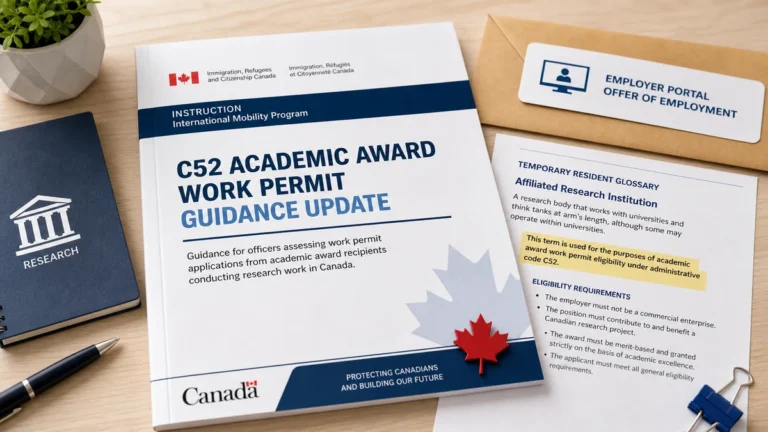
C52 academic award work permit guidance updated

Newfoundland and Labrador Issues 54 NLPNP & AIP Invitations

Canada Named Safest Country for Travel in 2027

Job Bank wage update 2026 set for November 18
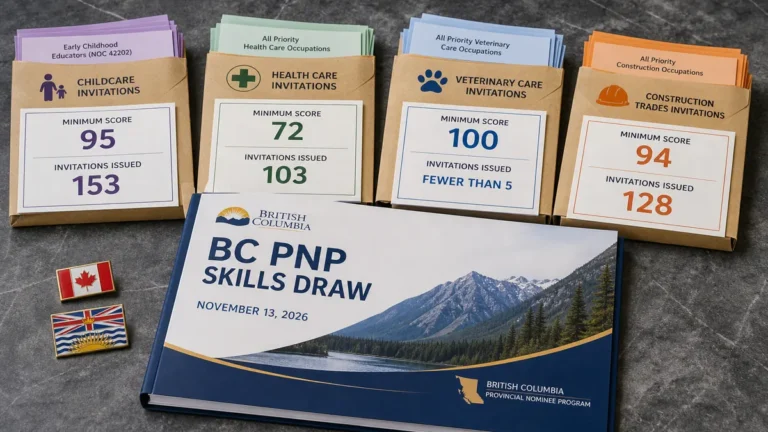
BC PNP Draw November 13, 2026: 384+ Invitations Issued

Newfoundland and Labrador Issues 38 NLPNP & AIP Invitations
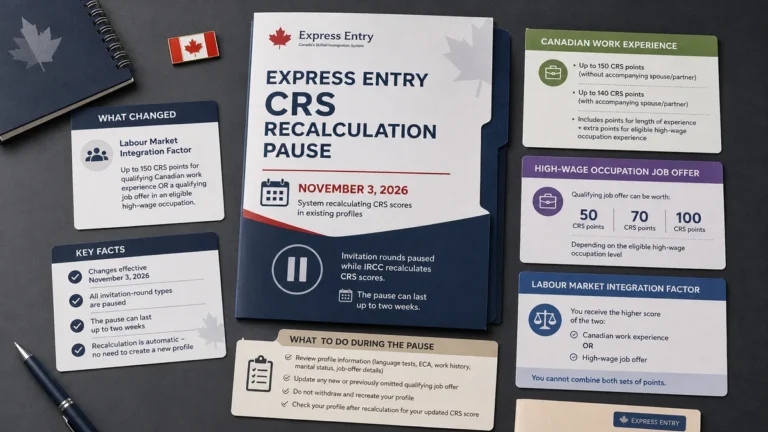
Express Entry Draws Paused for CRS Recalculation
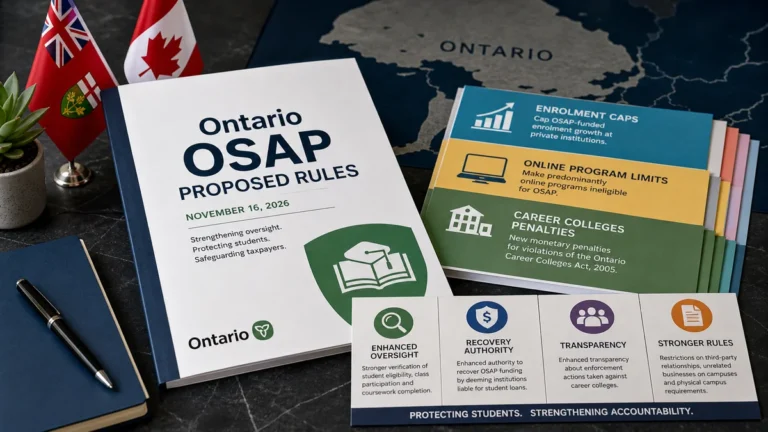
Ontario proposes OSAP rules for private institutions

Start-Up Visa Priority Processing: IRCC’s 3 Tiers