IRCC has updated its C52 academic award work permit guidance for foreign nationals conducting research work under the International Mobility Program. The department also added “affiliated research institution” to its Temporary Resident Glossary and clarified the term’s definition and applicable eligibility requirements.
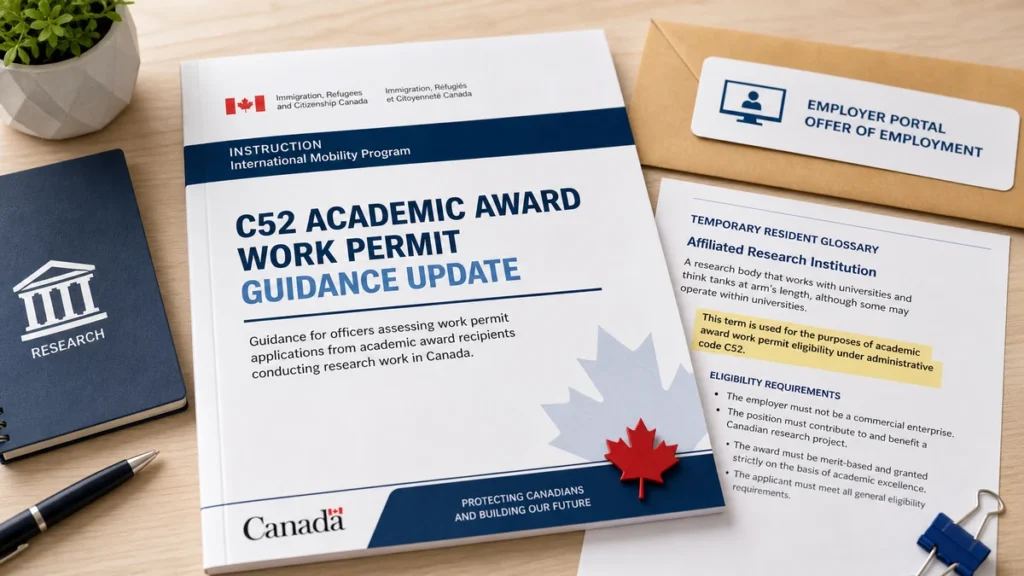
What changed in C52 academic award work permit guidance
IRCC says the instructions for academic award recipients conducting research work were reformatted to align with the International Mobility Program’s preferred format.
The department also updated language and added information on general eligibility, application assessment and final decisions. These are operational instruction updates for IRCC and Canada Border Services Agency officers, rather than an announced new immigration program.
Separately, IRCC added the term “affiliated research institution” to the Temporary Resident Glossary. The update includes clarification of the term’s definition and the eligibility requirements that apply.
Who the updated instructions concern
The guidance concerns foreign nationals seeking an employer-specific, Labour Market Impact Assessment-exempt work permit under administrative code C52 as recipients of academic awards for research work.
It also concerns Canadian academic institutions and affiliated research institutions that submit offers of employment for these workers through the Employer Portal.
- Applicants must be direct recipients of an award involving work and remuneration.
- Applicants must hold an official position, affiliation or registration with a credible academic or educational institution or agency in their country of citizenship or residence.
- Applicants must demonstrate academic excellence or expertise related to the work they will undertake.
- The employer must not be a commercial enterprise.
- The offered position must reflect the applicant’s experience and expertise and play a significant role in contributing to and benefiting a Canadian research project.
Current operational guidance for C52 applications
The updated instruction says an academic award for C52 purposes involves research work, including remuneration, offered by a Canadian academic institution and granted strictly on the basis of academic excellence.
IRCC’s current guidance states that the award must be merit-based, result from a competitive assessment and review process, and not be given primarily for recruitment or commercial purposes. Applicants are responsible for providing details about award eligibility and the process or criteria used to select recipients.
The glossary describes affiliated research institutions as research bodies that work with universities and think tanks at arm’s length, although some may operate within universities. The updated instructions should be reviewed where an employer or applicant relies on an institutional affiliation in support of C52 eligibility.
Documents and assessment points to review
IRCC’s current instructions list the evidence officers review when assessing C52 work permit applications. Applicants and institutions should ensure the information in the offer of employment and supporting material addresses the award, the applicant’s qualifications and the planned research role.
The instructions also state that officers should review the C52 exemption code and the information in the Employer Portal offer of employment, or the corresponding IMM 5802 fields where its use was authorized.
- An offer of employment number generated through the Employer Portal, or an authorized IMM 5802 form.
- Proof that the employer compliance fee was paid.
- Evidence of the award, including a letter explaining how it meets the award criteria.
- Evidence showing how the position reflects the applicant’s expertise and experience and why their role on the research project is suitable.
- Information outlining the award, how the applicant meets its criteria, how they will contribute to the research project and, where relevant, the academic or educational institution with which they are affiliated.
Work permit validity and decisions
Under the current instruction, officers may issue a C52 work permit for the duration of the offer of employment or until the applicant’s travel document expires, whichever comes first. Where a foreign national is exempt from the travel document requirement, the permit should be issued for the full duration of the offer.
If an officer is not satisfied that the requirements are met, the instruction directs the officer to record the reasons, rationale and relevant facts in a case note. Refusal reasons should identify the unmet requirement and explain how the conclusion was reached.
Source: IRCC Program Delivery Updates
Maplevisa provides Canadian immigration news and information for general informational purposes only. Content is not legal or immigration advice and should not be relied upon as a substitute for advice based on your individual circumstances. Immigration laws, policies, programs, and procedures may change. Where applicable, readers should consult the relevant official government or legal source for current information.
Disclaimer
Maplevisa provides Canadian immigration news and information for general informational purposes only. Content is not legal or immigration advice and should not be relied upon as a substitute for advice based on your individual circumstances. Immigration laws, policies, programs, and procedures may change. Where applicable, readers should consult the relevant official government or legal source for current information.
More Immigration News
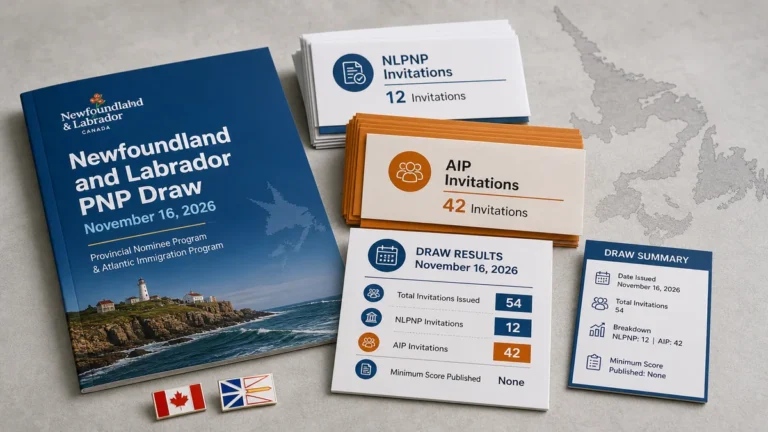
Newfoundland and Labrador Issues 54 NLPNP & AIP Invitations

Canada Named Safest Country for Travel in 2027

Job Bank wage update 2026 set for November 18
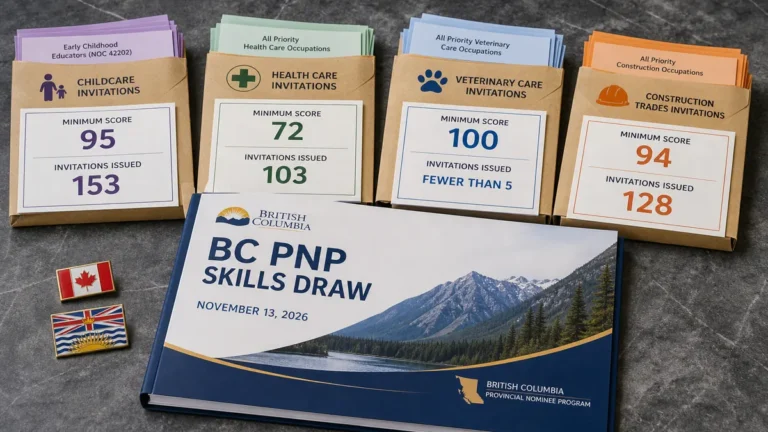
BC PNP Draw November 13, 2026: 384+ Invitations Issued
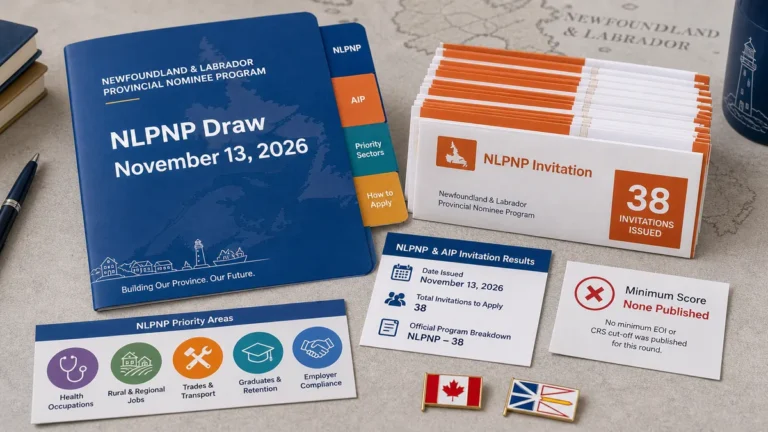
Newfoundland and Labrador Issues 38 NLPNP & AIP Invitations
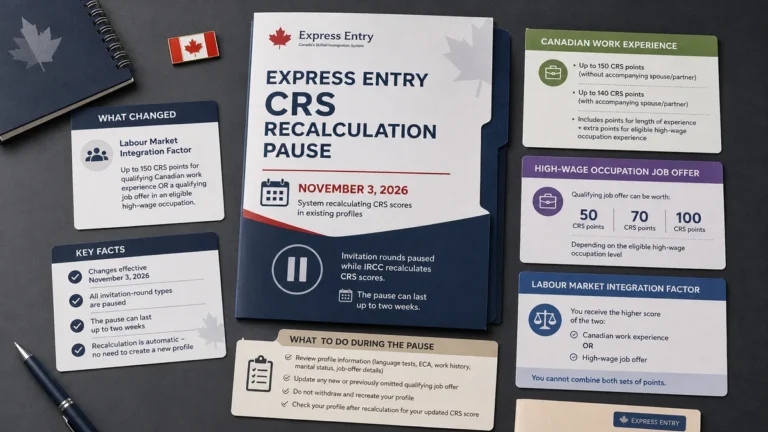
Express Entry Draws Paused for CRS Recalculation
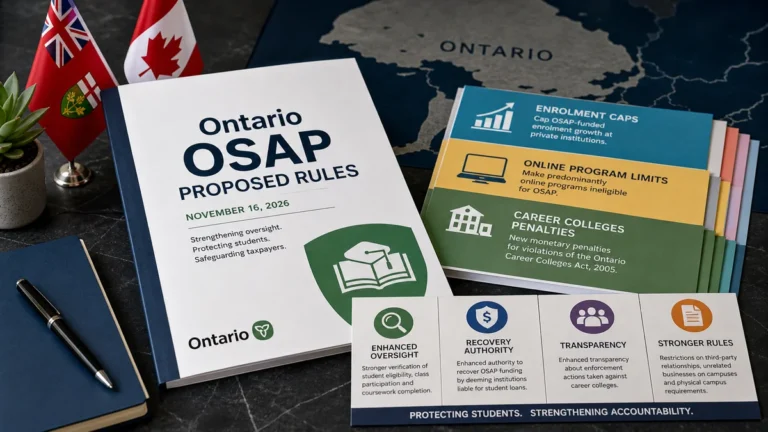
Ontario proposes OSAP rules for private institutions

Start-Up Visa Priority Processing: IRCC’s 3 Tiers

Alberta AAIP Issues 525 Invitations in 6 Rounds