
The Federal Court dismissed a Refugee Identity Evidence challenge to a Refugee Appeal Division (RAD) decision rejecting a Ghanaian claimant’s refugee protection claim. In Mensah v. Canada (Citizenship and Immigration), decided November 17, 2026, the Court found the RAD reasonably concluded that the claimant had not established his identity.
Case Summary
- Case & citation: Mensah v. Canada (Citizenship and Immigration), 2026 FC 1418, Court file IMM-24467-24.
- Decision date & judge: November 17, 2026, by The Honourable Mr. Justice A. Grant.
- Issue: The claimant sought review of the RAD’s rejection of his refugee protection claim for failing to establish his identity.
- Outcome: The application for judicial review was dismissed, with no costs and no certified question.
Why the Refugee Identity Evidence Challenge Failed
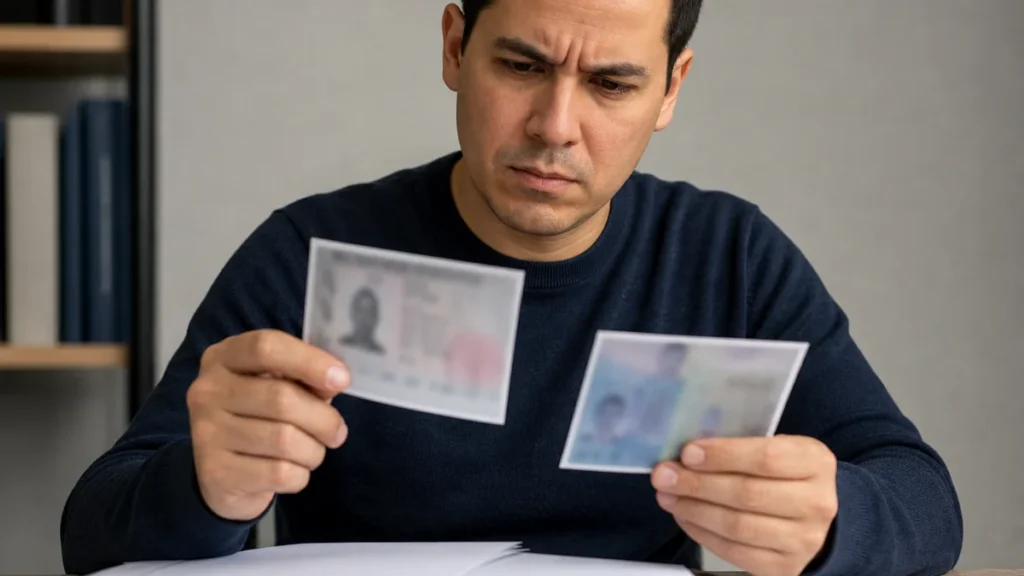
The claimant said he was a citizen of Ghana and feared persecution because of his bisexuality. He submitted no original identity documents with his refugee claim, relying instead on a partial photograph of a Ghanaian passport and a photograph of a Brazilian visa.
The Refugee Protection Division had found the photographs blurry, incomplete and unverifiable. It also concluded that the claimant had not taken reasonable steps to confirm his identity, including pursuing replacement documentation.
The RAD upheld that result on substantially the same grounds. It acknowledged that the passport and visa photographs appeared to refer to the same passport number, but found that the images remained unverifiable and did not establish identity.
Justice Grant applied the reasonableness standard, which the parties agreed governed the review. The Court stressed that refugee claimants bear the onus of establishing identity and that it was not the Court’s role to reassess the weight the RAD gave to the evidence.
The Court found that the claimant’s arguments largely asked it to re-weigh the RAD’s assessment. Justice Grant held that the RAD reasonably found the limited evidence insufficient, particularly where no new identity evidence was filed on appeal.
Consular contact was not the only option
The claimant argued that expecting him to approach the Ghanaian consulate for a passport would improperly require him to seek protection from his country of origin. The Court agreed that, as a general principle, the Immigration and Refugee Board should avoid language suggesting refugee claimants have a specific obligation to approach their home country for a passport solely to prove identity.
However, the Court found that this principle did not decide the case. The RAD had identified other possible steps, including obtaining a birth certificate or affidavits from family members, which would not necessarily require contact with Ghanaian authorities.
The Court also noted that the claimant had previously said he renewed his passport through Ghanaian officials while in Brazil. In the circumstances, it was open to the RAD to question why he could not seek identity documentation in Canada. The claimant had also provided no new information before the RAD despite having four months after the Refugee Protection Division decision to pursue further evidence.
Other alleged errors did not affect the result
The Court rejected arguments concerning document fraud evidence in Ghana, the claimant’s account of obtaining his first passport, his use of Twi during the hearing and the RAD’s scrutiny of the photographic documents.
Justice Grant found that the RAD did not rely principally on the availability of fraudulent documents in Ghana. Its central finding was that the claimant’s photographs were unverifiable, lacked key components and did not establish identity.
Practical Implications for Lawyers and RCICs
The Court’s finding was fact-specific: the RAD had considered several potential avenues for identity evidence, including options that did not involve approaching Ghanaian authorities, and the claimant filed no new evidence on appeal (paras 20 and 23). For a comparable record, this suggests that a reasonableness challenge may turn on whether the tribunal considered the available alternatives rather than on one suggested route to obtain a passport.
Source: Federal Court Decisions
Maplevisa provides Canadian immigration news and information for general informational purposes only. Content is not legal or immigration advice and should not be relied upon as a substitute for advice based on your individual circumstances. Immigration laws, policies, programs, and procedures may change. Where applicable, readers should consult the relevant official government or legal source for current information.
Disclaimer
Maplevisa provides Canadian immigration news and information for general informational purposes only. Content is not legal or immigration advice and should not be relied upon as a substitute for advice based on your individual circumstances. Immigration laws, policies, programs, and procedures may change. Where applicable, readers should consult the relevant official government or legal source for current information.
More Immigration News
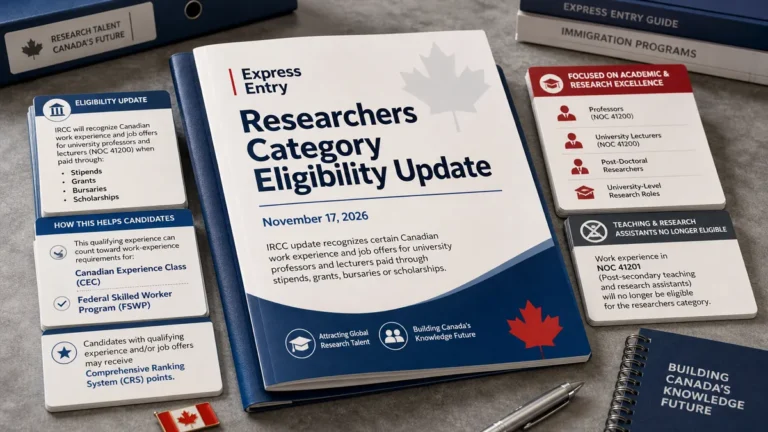
Express Entry researchers category eligibility updated
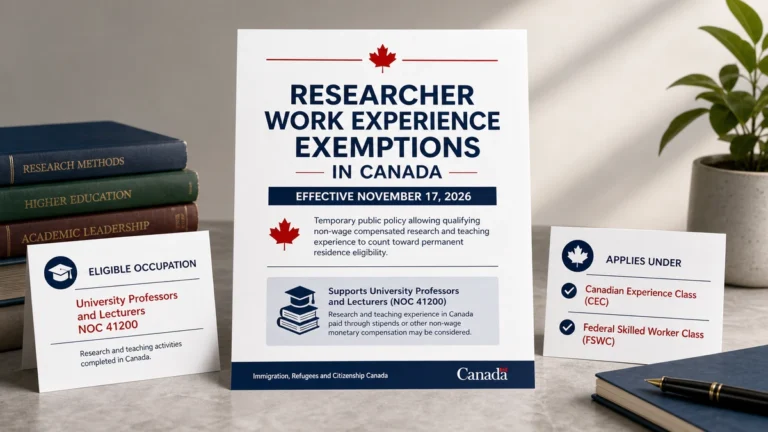
Researcher work experience exemptions in Canada
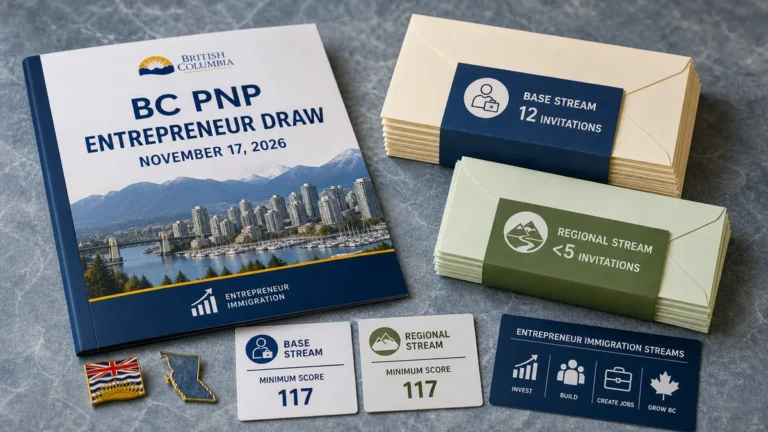
BC PNP Entrepreneur Draw, November 17, 2026

New Brunswick Reports 390 PNP Invitations and 73 AIP Selections
C52 academic award work permit guidance updated

Newfoundland and Labrador Issues 54 NLPNP & AIP Invitations

Canada Named Safest Country for Travel in 2027

Job Bank wage update 2026 set for November 18
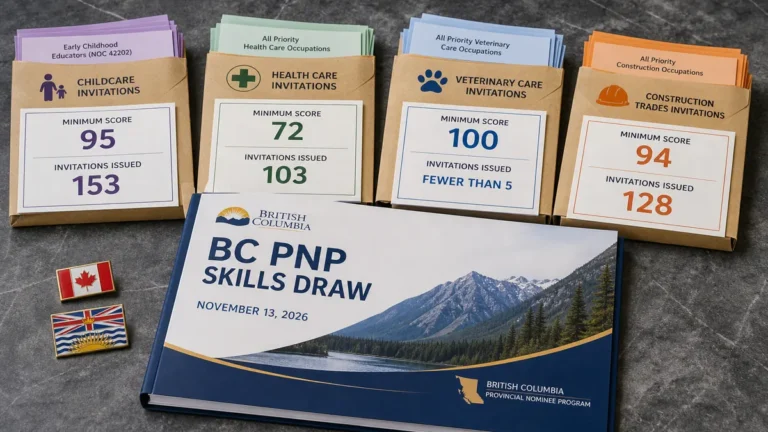
BC PNP Draw November 13, 2026: 384+ Invitations Issued