The Federal Court dismissed an LCA Family PR Eligibility challenge involving four permanent residence refusals under the Temporary Public Policy for Extended Families of Former Language and Cultural Advisors. The Court found the refusals were reasonable because the Department of National Defence could not confirm that the applicants’ sibling had worked as a language and cultural advisor during the required period.

Case Summary
- Case & citation: Barekzai v. Canada (Citizenship and Immigration), 2026 FC 1410; the cited court file is IMM-36-25, and the consolidated judicial review proceeded as IMM-43-25.
- Decision date & judge: November 16, 2026, by the Honourable Justice Giuseppina D’Agostino.
- Issue: The applicants challenged four refusals of permanent residence applications under the policy for extended family members of former language and cultural advisors.
- Outcome: The judicial review was dismissed; the Court found no reviewable error or breach of procedural fairness, and no question was certified.
Why LCA Family PR Eligibility Was Not Established
The applicants were siblings of Amer Zeb Durrani, who claimed to have worked as a language and cultural advisor for the Canadian government and the Department of National Defence in Afghanistan from June 2008 to May 2009. Their applications were refused after DND could verify that he had worked for it in Afghanistan, but could not confirm that he had been employed specifically as an LCA.
The applicants argued that the officer did not meaningfully assess statutory declarations and photographs supporting Mr. Durrani’s LCA work. They also submitted that the policy did not require official employment records beyond the documents identified in the application process.
Justice D’Agostino accepted that the officer had erred by finding the statutory declarations were missing. However, the Court held that this error was not sufficiently central to make the decisions unreasonable because DND confirmation of LCA employment was independently determinative under the policy.
The Court also found that Mr. Durrani’s own permanent residence did not establish that he had been admitted as an LCA, particularly because his earlier application was not before the officer. At paragraph 15, the Court concluded that the reasons were clear: without DND confirmation of the required LCA employment, the applicants were ineligible.
Court Finds No Procedural Fairness Breach
The applicants said they reasonably expected DND to verify Mr. Durrani’s work through people named in his statutory declaration. They also argued that they should have been given an opportunity to address concerns about his employment and credibility.
The Court disagreed. At paragraphs 17 and 18, it found that the policy itself made DND confirmation of LCA employment an express eligibility requirement and did not contain a clear, unambiguous and unqualified representation that DND had to contact particular individuals.
The Court further found that the refusals did not rest on an undisclosed credibility concern or a finding that Mr. Durrani had misrepresented his work history. Rather, as explained at paragraph 20, DND’s inability to confirm the specific LCA employment required by the policy was not, by itself, an adverse credibility finding requiring another opportunity to respond.
Practical Implications for Lawyers and RCICs
The Court’s finding at paragraph 15 was tied to the policy’s requirement for DND confirmation, despite an error concerning the statutory declarations. For a comparable record, this suggests that evidence supporting the underlying work history may not overcome the absence of verification that a public policy identifies as a separate eligibility condition.
The procedural fairness analysis was similarly fact-specific. The Court found no undisclosed adverse information or credibility finding at paragraph 20; an inability to confirm required employment was treated differently from an allegation that the applicant’s evidence was untruthful.
Source: Federal Court Decisions
Maplevisa provides Canadian immigration news and information for general informational purposes only. Content is not legal or immigration advice and should not be relied upon as a substitute for advice based on your individual circumstances. Immigration laws, policies, programs, and procedures may change. Where applicable, readers should consult the relevant official government or legal source for current information.
Disclaimer
Maplevisa provides Canadian immigration news and information for general informational purposes only. Content is not legal or immigration advice and should not be relied upon as a substitute for advice based on your individual circumstances. Immigration laws, policies, programs, and procedures may change. Where applicable, readers should consult the relevant official government or legal source for current information.
More Immigration News
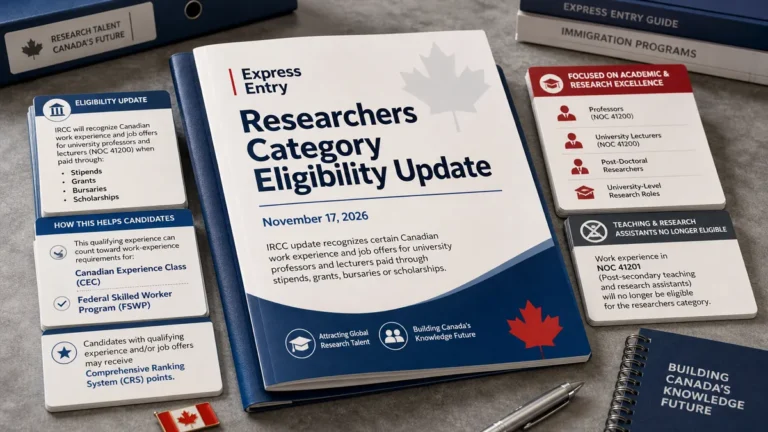
Express Entry researchers category eligibility updated
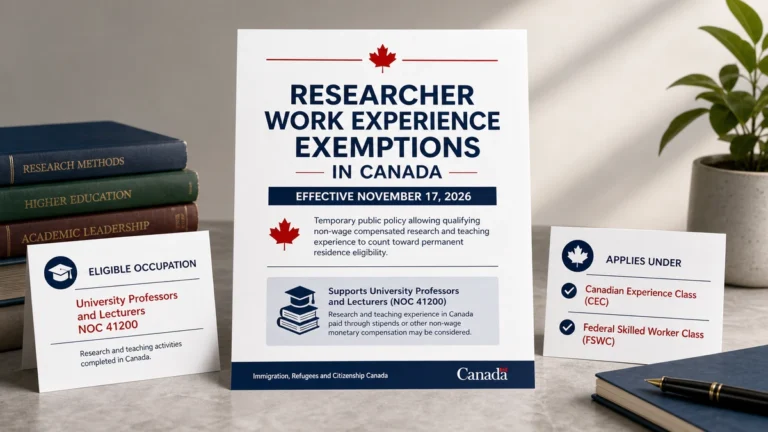
Researcher work experience exemptions in Canada

BC PNP Entrepreneur Draw, November 17, 2026

New Brunswick Reports 390 PNP Invitations and 73 AIP Selections
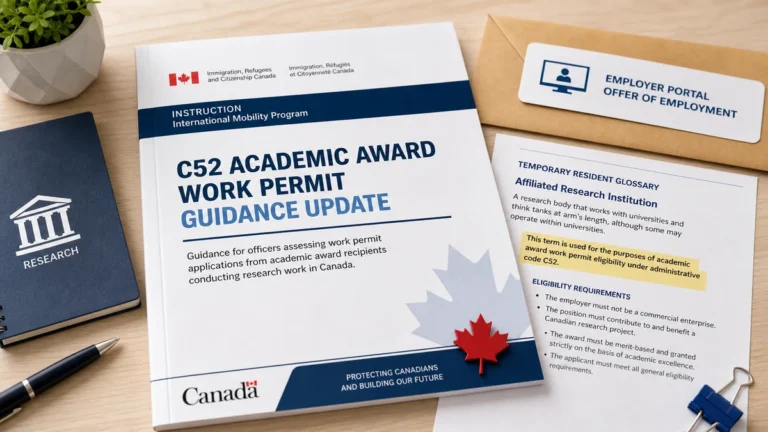
C52 academic award work permit guidance updated

Newfoundland and Labrador Issues 54 NLPNP & AIP Invitations

Canada Named Safest Country for Travel in 2027

Job Bank wage update 2026 set for November 18
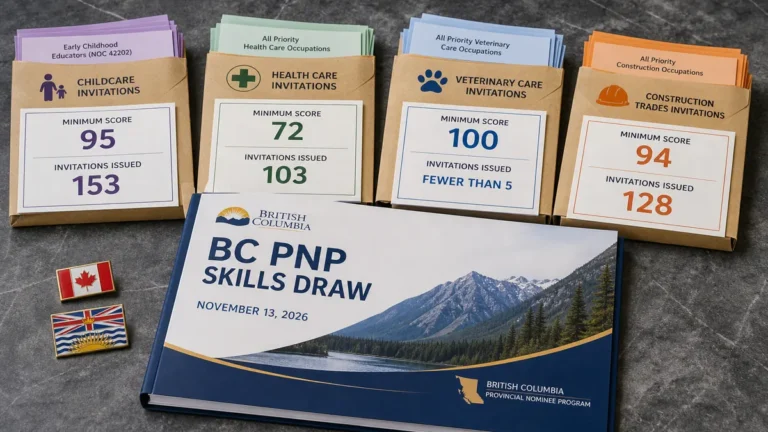
BC PNP Draw November 13, 2026: 384+ Invitations Issued