The Federal Court allowed a judicial review in a refugee claim credibility case involving a Colombian family, finding the Refugee Protection Division made unreasonable plausibility findings about key evidence. The February 5, 2025 decision and its “no credible basis” finding were set aside, and the matter was sent back for redetermination.

Case Summary
- Case & citation: Gallo Et Al. v. Canada (Citizenship and Immigration), 2026 FC 1337, Court file IMM-4885-25.
- Decision date & judge: October 30, 2026, by Madam Justice Sadrehashemi.
- Issue: The applicants challenged an RPD refusal of their refugee protection claims and the related no credible basis finding.
- Outcome: Judicial review was allowed; the February 5, 2025 decision was set aside and returned for redetermination.
Refugee claim credibility and the no-credible-basis finding
The applicants were Ms. Gutierrez, her spouse, their minor child and her sister. They sought refugee protection based on fears that Colombian police could not protect them from threats and violence by a criminal organization.
The Refugee Protection Division found their allegations not credible and concluded there was no credible basis for the claims under subsection 107(2) of the Immigration and Refugee Protection Act. The judgment explained that such a finding prevents an appeal of the negative RPD decision to the Refugee Appeal Division and removes the statutory stay of removal that would otherwise apply while an appeal and judicial review are pending.
At judicial review, the parties agreed that the central credibility issues concerned the substance of the RPD decision. Justice Sadrehashemi therefore reviewed the decision on the reasonableness standard.
Hospital report and injury photos were key concerns
The RPD had concluded that an alleged October 2022 attack was fabricated. It relied in part on what it considered a fraudulent hospital report, citing uneven line indentation and pixelation in the background logo of the hospital letter.
Justice Sadrehashemi found this conclusion was a significant leap based on unsupported assumptions and speculation about how a hospital in Colombia prepares its letters. The Court noted that foreign documents may not follow customs, traditions or language conventions familiar in Canada.
The RPD also treated photographs submitted by Ms. Gutierrez as inconsistent with the hospital report. The Court found it may have been open to the RPD to decide that the photographs did not clearly corroborate the alleged injuries. However, it was unreasonable to go further and conclude that the photographs supported findings that the hospital report and attack were fabricated.
The Court also found the RPD unreasonably assessed a support letter describing Ms. Gutierrez as distressed and disoriented after the attack. Rather than contradicting the hospital report, the letter supported aspects of its description, including disorientation and altered emotional behaviour.
Findings about threats and family evidence were unreasonable
The RPD also rejected an allegation that a July 2022 threat occurred. It reasoned that a photograph of a broken window did not show glass shards that would be expected if a rock had been thrown through it, and that the format of a threatening note did not match known criminal practices or another alleged threat.
The Court found these conclusions rested on weak plausibility findings. The photograph offered only a limited view of the room, and the record did not contain evidence that the criminal group could communicate only in one particular format.
Justice Sadrehashemi also found the RPD's treatment of Ms. Gutierrez's sister's evidence unreasonable. The sister said she had not been told details of threats or the reasons for family moves and school changes. The RPD had found it more likely that she was unaware of later persecution because none had occurred.
The Court stated that what a family chooses to share with a child about its problems is a deeply personal decision and that decision-makers must be cautious about assumptions concerning how families would behave.
Court ordered a new determination
The Court concluded that the RPD's credibility reasons did not show the care and attention required in refugee matters. It found that the RPD's implausibility findings concerning the hospital report, the sister's evidence and the photographic evidence did not withstand scrutiny.
Because those errors went to the credibility of the applicants' account, the Court set aside both the negative decision and the no credible basis finding. The matter will be reconsidered through a new determination; the judgment does not itself grant refugee protection.
The Court did not decide the applicants' other procedural fairness arguments because its findings on the credibility analysis were sufficient to resolve the judicial review. It also did not hear the incompetence of counsel arguments after former counsel had not been notified that leave had been granted and therefore had no opportunity to seek leave to intervene.
Source: Federal Court Decisions
Disclaimer
Maplevisa provides Canadian immigration news and information for general informational purposes only. Content is not legal or immigration advice and should not be relied upon as a substitute for advice based on your individual circumstances. Immigration laws, policies, programs, and procedures may change. Where applicable, readers should consult the relevant official government or legal source for current information.
More Immigration News
Apply for Canada Study Permit 2027

CRS Points Express Entry: November 3 Changes

Haiti Open Work Permit Renewals Policy
Sudan Open Work Permit Renewal Policy in Canada

Canada Immigration Processing Times on 1 November 2026

BC PNP Skills Draw Issues 772 ITAs on October 29, 2026

IRCC Changes LMIA Concurrent Processing
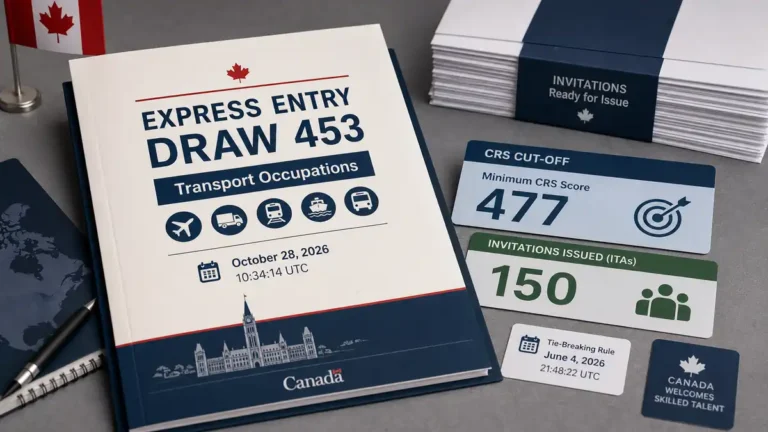
Express Entry Draw 453 Transport on October 28, 2026
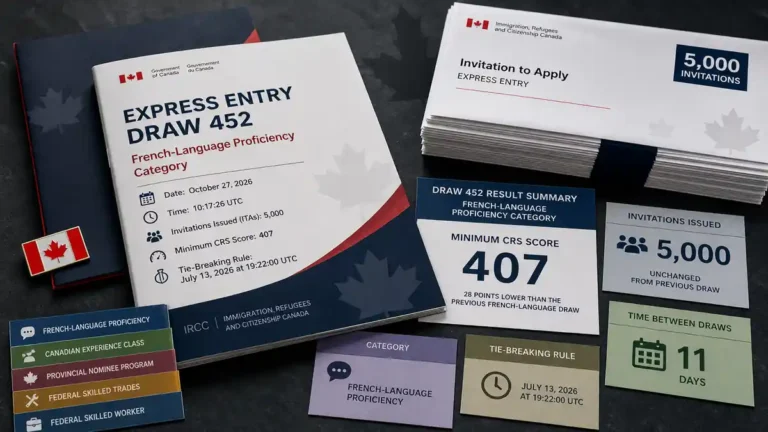
Express Entry Draw 452 French-Language on October 27, 2026