A77 open work permit eligibility changed on December 19, 2025, for Start-up Visa applicants with a pending permanent residence application. Applicants applying from that date must hold, or be eligible to restore, a work permit issued to start the business in their commitment certificate, while renewals may still be considered where the business continues to create significant benefits in Canada.
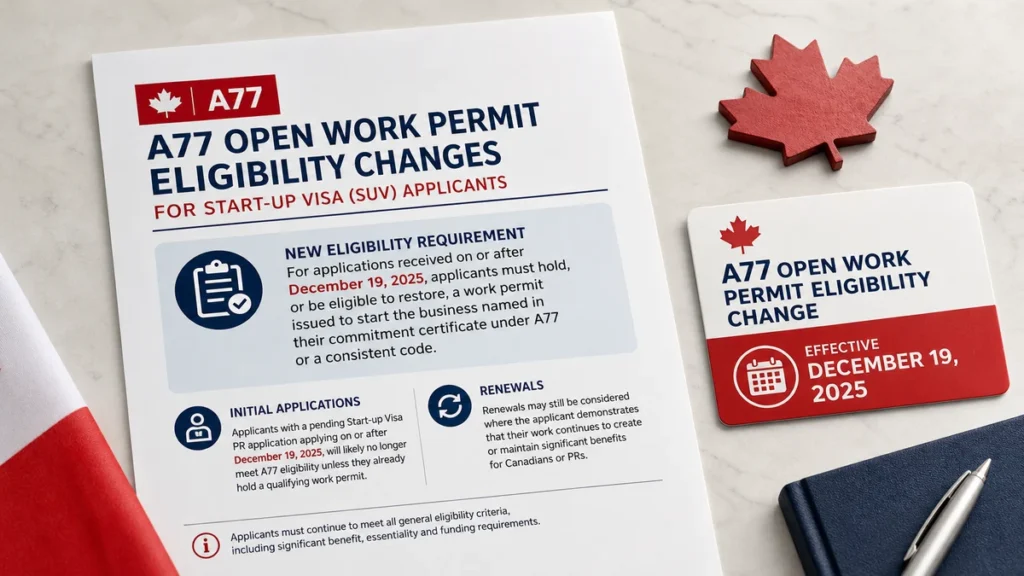
A77 open work permit eligibility from December 19, 2025
IRCC has changed the eligibility criteria for International Mobility Program open work permits under administrative code A77. The category applies to Start-up Visa Program permanent residence applicants whose work may be assessed for significant social, cultural or economic benefits or opportunities for Canadian citizens or permanent residents.
For work permit applications received on or after December 19, 2025, an applicant must have a valid work permit, or be eligible for restoration, that was issued to start the business named in the commitment certificate under A77 or a consistent code.
IRCC says applicants with a pending Start-up Visa permanent residence application who seek an initial work permit from that date will likely no longer meet the A77 eligibility criteria unless they already hold a qualifying permit. The department links the change to long permanent residence processing times, the difficulty of launching a business while holding temporary status and uncertainty about a near-term transition to permanent residence.
- Applications received before December 19, 2025: Applicants must meet the general eligibility criteria in the instructions.
- Applications received before October 3, 2024: Officers must use separate employer-specific work permit instructions.
Current requirements and evidence for SUV work permits
The updated instructions say applicants must also meet the general eligibility criteria. These include a pending Start-up Visa permanent residence application submitted while the commitment certificate was valid, a Letter of Support showing the applicant is essential, and evidence that the work or business will provide, or has provided and will continue to provide, a significant benefit for Canadians or permanent residents.
Applicants in a start-up ownership group must also have all essential members with a pending or approved permanent residence application. Applicants must be residing and have started their business outside Quebec.
The guidance calls for support funds meeting the low-income cut-off for the applicant’s family size for at least 52 weeks, separate liquid funds for continuing investment commitments, and evidence that the applicant can perform the work sought. Applications in this category cannot be submitted at a port of entry.
- Letter of Support (LOS): For an initial application, the applicant must provide a Letter of Support from the designated entity that was valid when the permanent residence application was submitted.
- Language test score: New test results are not required where results were valid for a previous work permit application or when the permanent residence application was received.
- Business evidence: Supporting material may include a business plan, staffing plan, proof of exploratory research, site selection or supplier discussions, and other business-related documents.
- Investment funds: Where funding is needed for the business activities, applicants should show that funds are available, transferable and unencumbered; officers focus on liquidity rather than the amount invested.
Renewal files and significant-benefit assessment
A person who holds a work permit issued to start a designated-entity-supported business and has initiated that business in Canada may renew the permit before a final permanent residence decision if they show their work continues to create or maintain significant benefits or opportunities for Canadians or permanent residents.
IRCC states that a new Letter of Support is not required for a work permit renewal. Officers should not request a new letter, although they may request a copy of the previous one if needed; they may also consult the previous work permit application or request copies of earlier language test results if reassessment is necessary.
When assessing significant benefit, officers review all supporting documentation and must make their own assessment. A designated entity’s assessment may form part of the decision but does not replace the officer’s assessment under R205(a) and the requirements of R200.
- For applications received on or after December 19, 2025, officers should consider whether the applicant is already in Canada and has started the business under a work permit based on a commitment certificate.
- Applicants bear the onus of showing that they meet the applicable requirements, including why their work creates or maintains significant benefits.
- Applicants may have dual intent, but they must satisfy the officer that they will leave Canada at the end of their authorized stay.
Other operational instruction updates
IRCC’s update also identifies clarified guidance on renewal documents, designated entity suspensions, significant-benefit considerations, dual intent, and the Letter of Support and commitment certificate.
The suspension described in Operational Bulletin 692, dated February 18, 2026, has ended. Officers may continue processing affected applications that had been put on hold, but IRCC says they must still thoroughly review the information in each application before deciding.
The work permit issuance instructions now include the user remark that the holder is not authorized for employment in Quebec.
- Where an officer is not satisfied that the requirements are met, the officer must record the reasons, rationale, facts and elements considered in the decision case note.
- Refusal reasons must identify the unmet R200 requirement and explain how the conclusion was reached.
Source: IRCC Program Delivery Updates
Maplevisa provides Canadian immigration news and information for general informational purposes only. Content is not legal or immigration advice and should not be relied upon as a substitute for advice based on your individual circumstances. Immigration laws, policies, programs, and procedures may change. Where applicable, readers should consult the relevant official government or legal source for current information.
Disclaimer
Maplevisa provides Canadian immigration news and information for general informational purposes only. Content does not constitute legal or immigration advice and should not be relied upon as a substitute for advice based on individual circumstances. Immigration laws, regulations, policies, programs, and procedures may change. Readers should consult relevant official government sources, legislation, or court decisions, as appropriate, to verify current information.
More Immigration News
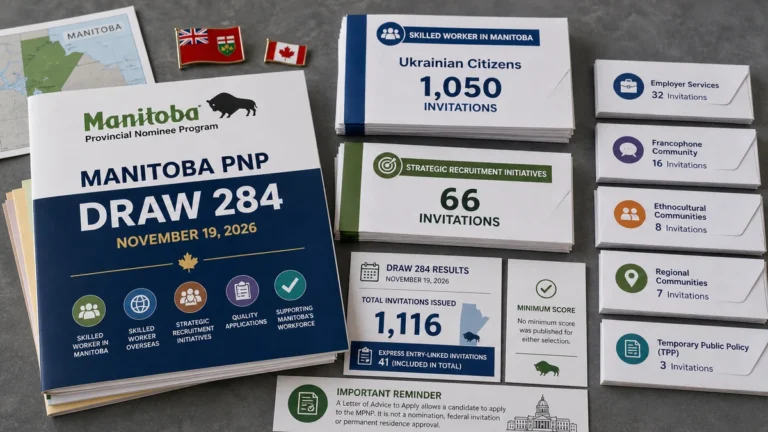
Manitoba PNP draw 284 selects 1,116 on November 19, 2026
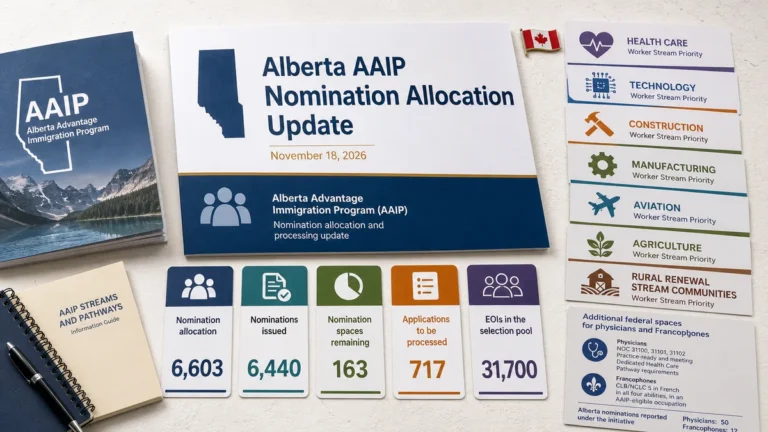
Alberta AAIP Issues 374 Invitations in 3 Rounds
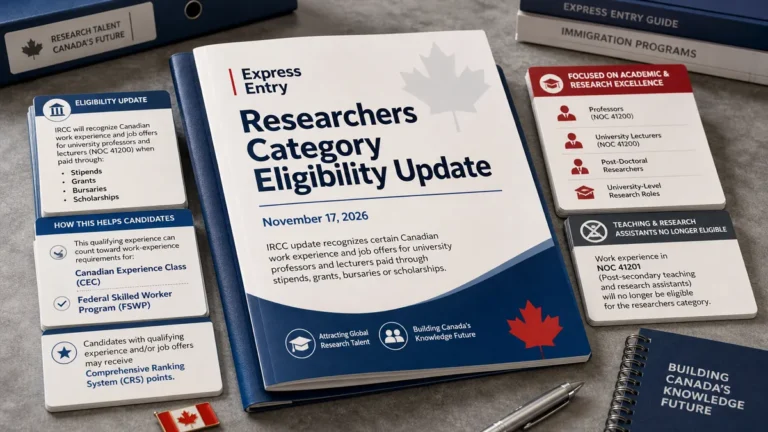
Express Entry researchers category eligibility updated
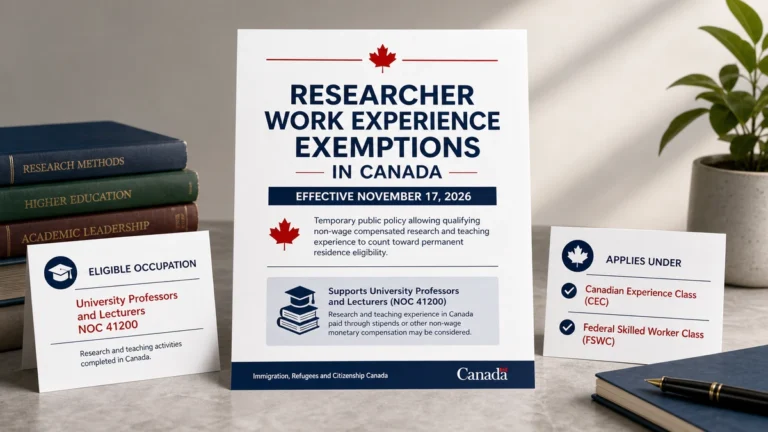
Researcher work experience exemptions in Canada
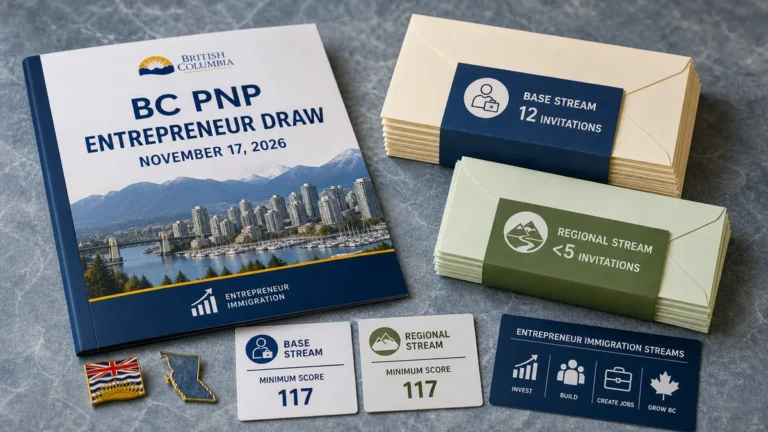
BC PNP Entrepreneur Draw, November 17, 2026
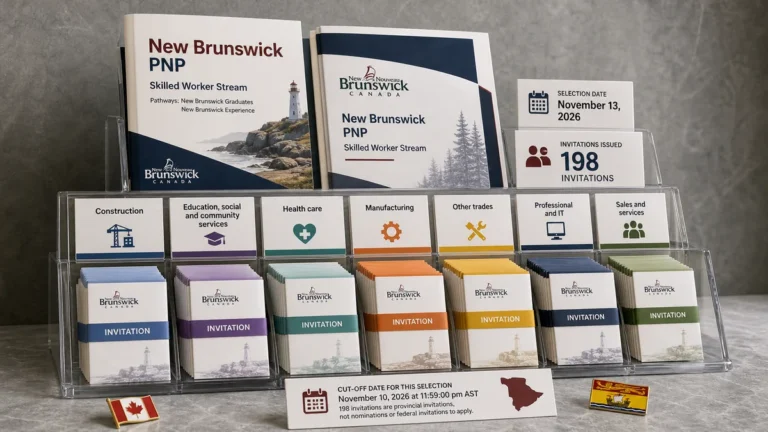
New Brunswick Reports 390 PNP Invitations and 73 AIP Selections
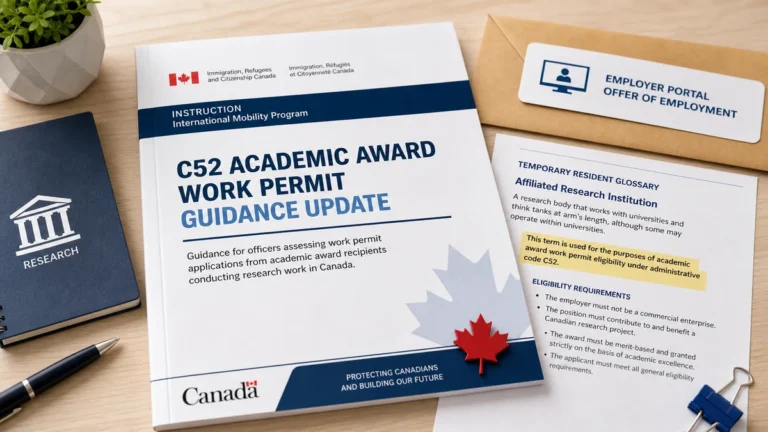
C52 academic award work permit guidance updated

Newfoundland and Labrador Issues 54 NLPNP & AIP Invitations

Canada Named Safest Country for Travel in 2027