
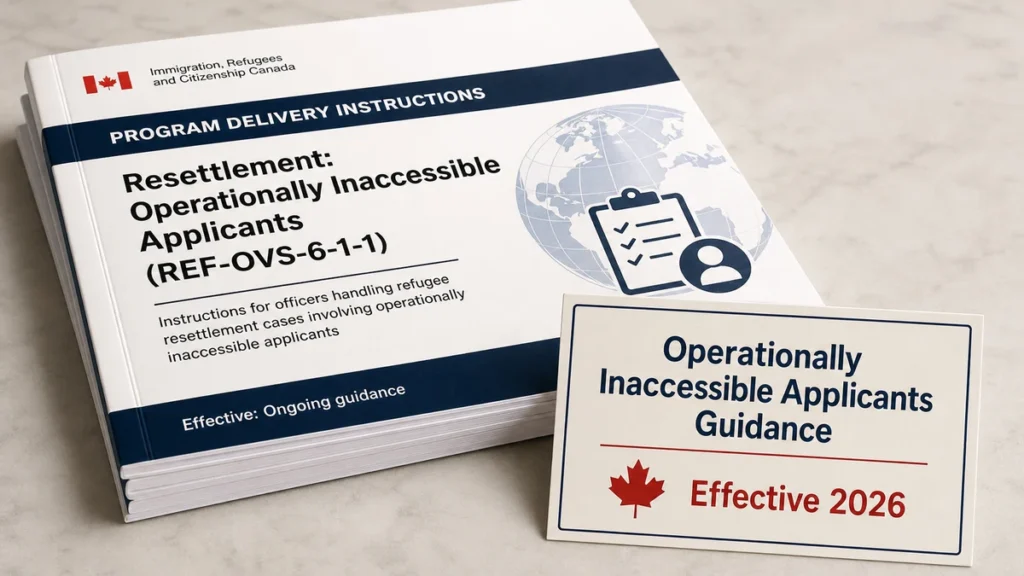
IRCC has issued new guidance for officers handling refugee resettlement cases involving operationally inaccessible applicants—people living in locations where the department cannot complete required processing activities. The instructions address alternatives for interviews, biometrics and medical examinations, as well as holds, refusals and possible reconsideration.
Who the new guidance covers
The guidance applies to refugee resettlement applicants who are inaccessible or unreachable because IRCC cannot operationally process their applications in their location. This may include locations with security concerns, diplomatic visa restrictions or other circumstances unlikely to change in the foreseeable future.
Examples include applicants in areas without an IRCC presence, where officers cannot travel, where there is no access to panel physicians or biometrics enrolment facilities, or where an applicant is in detention. It also covers principal applicants and dependants in countries where services such as medical examinations, visa application centres or migration offices are temporarily unavailable.
Options for operationally inaccessible applicants
The updated instruction, Resettlement: Operationally Inaccessible Applicants (REF-OVS-6-1-1), directs officers to consider the circumstances of each case and whether an interview is necessary.
Where conditions permit, officers may consider a virtual or telephone interview under their migration office procedures. They may also determine whether the International Organization for Migration, the United Nations High Commissioner for Refugees or a visa application centre can help facilitate a remote interview.
If a remote interview is not possible, an officer can consider waiving the interview and making a dossier-based assessment. Officers may send written questions to an applicant and consider the responses when making a decision.
- An interview waiver and dossier-based assessment can be considered where there are no serious credibility concerns.
- It can also be considered for an urgent protection case, or where the application is complete and there is sufficient information to assess eligibility and admissibility.
- The guidance also refers to well-understood country conditions and strong relationships with referral organizations, including the UNHCR, for government-assisted refugees and privately sponsored refugees.
Biometrics and medical examination alternatives
A delegated officer may consider a case-by-case biometrics exemption under R12.8 when an applicant’s situation affects their ability to provide biometrics. The officer must record the specific reasons for the waiver in GCMS and select an applicable exemption reason.
Applicants granted a biometrics waiver under this process will have biometrics collected at the port of entry before they are admitted to Canada as permanent residents. Once travel arrangements are finalized and a Notification of Arrival has been sent, the migration office must transfer the refugee resettlement permanent residence application in GCMS to the Resettlement Operations Division.
If an immigration medical examination cannot be completed or finalized within a reasonable time frame, an officer may consider issuing a temporary resident permit to allow travel and completion of the examination in Canada. The officer should consult their Migration Program Manager.
Holds and refusal steps
If processing constraints cannot be resolved through the available options, officers must enter a GCMS case note explaining the situation and may put the application on hold. The guidance recommends six months as an average hold duration, although a shorter or longer period may be appropriate depending on the circumstances.
Before refusing an application because an applicant is inaccessible, officers should make additional efforts and be satisfied that reasonable alternatives have been considered and exhausted. This reflects that the obstacle may be outside the applicant’s control.
- After the hold period, officers should send a request letter asking the applicant, or sponsor where applicable, to update contact information.
- If the response does not resolve the accessibility concern, officers should send a procedural fairness letter explaining that non-compliance may lead to refusal and giving the applicant an opportunity to withdraw the application.
- If there is no response within the allotted time or the response is unsatisfactory, the application may be refused under A11 or A16 (1.1).
- A refusal note must state that the application was refused because the applicant was inaccessible, and officers must add the specified organizational ID in GCMS for tracking.
Reopening a refused application
If circumstances change—for example, if an applicant moves to another country or is released from detention—they may contact the migration office to request that the application be reopened. The applicant should provide evidence that the barrier preventing processing no longer exists.
Officers may request further documentation and may consider reopening the application on a case-by-case basis. IRCC states that it does not have the legal authority to withdraw an application on an applicant’s behalf; withdrawal must be initiated by the applicant or their designated representative.
Source: IRCC Program Delivery Updates
Maplevisa provides Canadian immigration news and information for general informational purposes only. Content is not legal or immigration advice and should not be relied upon as a substitute for advice based on your individual circumstances. Immigration laws, policies, programs, and procedures may change. Where applicable, readers should consult the relevant official government or legal source for current information.
Disclaimer
Maplevisa provides Canadian immigration news and information for general informational purposes only. Content is not legal or immigration advice and should not be relied upon as a substitute for advice based on your individual circumstances. Immigration laws, policies, programs, and procedures may change. Where applicable, readers should consult the relevant official government or legal source for current information.
More Immigration News
C52 academic award work permit guidance updated

Newfoundland and Labrador Issues 54 NLPNP & AIP Invitations

Canada Named Safest Country for Travel in 2027

Job Bank wage update 2026 set for November 18
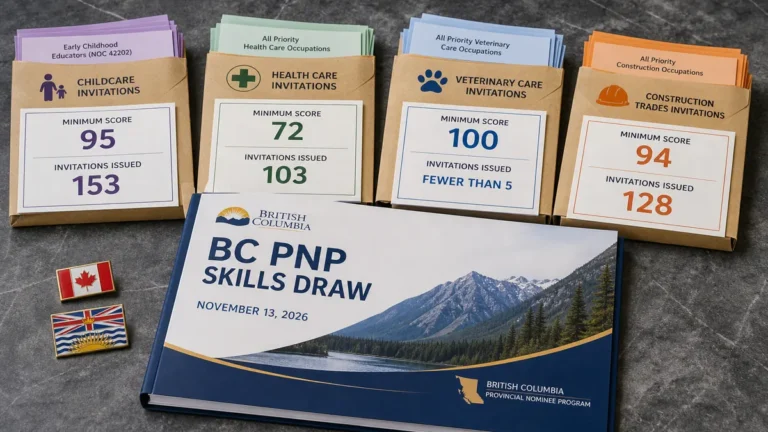
BC PNP Draw November 13, 2026: 384+ Invitations Issued
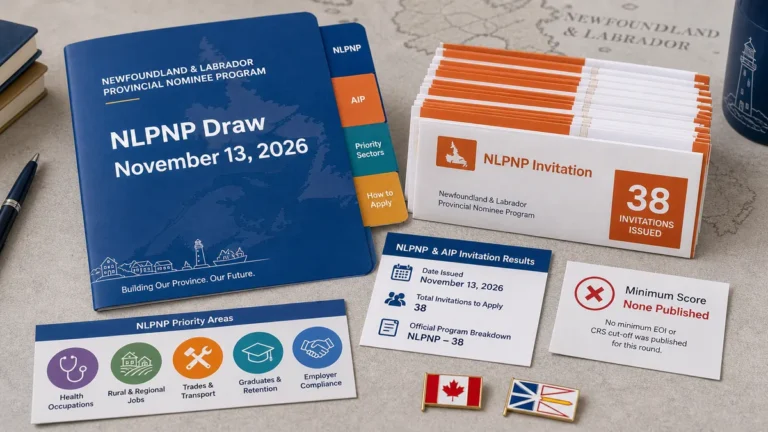
Newfoundland and Labrador Issues 38 NLPNP & AIP Invitations
Express Entry Draws Paused for CRS Recalculation
Ontario proposes OSAP rules for private institutions

Start-Up Visa Priority Processing: IRCC’s 3 Tiers