
How Start-Up Visa priority processing works
IRCC processes files first by priority category and then generally on a first-in, first-out basis within that category. The order applies to the existing inventory, including applications submitted before the instructions took effect.
- Tier 1 (Highest Priority): At least one member of the entrepreneurial team holds a valid Start-Up Business Class A77 work permit, and the commitment is from an authorized venture capital fund investing at least $200,000, an authorized angel investor group investing at least $75,000, or an authorized business incubator that belongs to Canada’s Tech Network or commits at least $75,000.
- Tier 2 (Second Priority): The application meets the same investment or Canada’s Tech Network incubator condition, but no team member holds the qualifying Start-Up Business Class work permit.
- Tier 3 (Standard Queue): Other accepted Start-Up Business Class applications that do not meet the Tier 1 or Tier 2 conditions.
What the priority order means for SUV applicants
A qualifying work permit does not by itself place an application in the first queue. The team must also have a commitment from a venture capital fund, angel investor group or business incubator that meets the listed investment or Canada’s Tech Network criteria.
Likewise, a venture supported by a qualifying designated entity can fall into the second queue even if no team member has the Start-Up Visa (SUV) work permit. Applications outside those conditions remain eligible for processing if previously accepted, but are considered after the first two groups.
Important Note: Priority processing changes the order in which IRCC considers files; it is not an approval guarantee. Applicants must still meet all Start-Up Business Class requirements and pass standard admissibility and application assessment stages.
The 2026 intake pause and expired transition window
From November 10, 2026, the Ministerial Instructions set the number of new Start-Up Business Class applications accepted for processing at zero until further notice. A narrow transition exception applied to applications supported by a commitment certificate received by IRCC before January 1, 2026.
Those transition applications also had to be submitted within six months of the commitment date shown on the first valid certificate, and the designated entity could not have exceeded the applicable 2025–2026 acceptance limit. In practical terms, the latest possible application date was June 30, 2026.
That transition period has now ended. IRCC states that the Start-Up Visa Program has been paused since June 30, 2026, that it stopped accepting commitment certificates after December 31, 2025, and that it will continue processing applications received before June 30, 2026.
Team and commitment certificate points to watch
The regulations allow no more than five Start-Up Business Class applicants for the same business. Each applicant needs a commitment that was less than six months old when their permanent residence application was made, as well as the required language results and settlement funds.
A qualifying business must be incorporated in Canada, involve active and ongoing management from within Canada, and have an essential part of its operations in Canada. The regulations permit an applicant to show an intention to meet these operating requirements after becoming a permanent resident.
Applicants should also treat the entrepreneurial team as a linked group. Where a person identified as essential to the business is refused or withdraws, the other applicants connected to that business are generally considered not to meet the Start-Up Business Class requirements.
- Do not assume a later amendment to a commitment certificate restarts its six-month validity period.
- For files already in inventory, confirm whether every related team application has been submitted, because group completeness affects when IRCC can process the commitment.
- A priority tier is determined by the conditions in the Ministerial Instructions, not simply by the business sector or the age of the application.
Qualifying Business Requirements Under the Start-Up Business Class
Under paragraph R98.01(2)(d) and subsection R98.06(1)of the Immigration and Refugee Protection Regulations (IRPR), every Start-Up Business Class applicant must have started a qualifying business an entity formed for commercial purposes whose ownership structure meets the minimum voting-rights percentages established by the Minister.
In addition to ownership rules, the business must satisfy three core operational criteria (or the applicant must demonstrate a genuine intention to fulfill them upon becoming a permanent resident):
| Requirement Area | Mandatory Standard |
| Active Management | The applicant must provide active and ongoing management of the business from within Canada. |
| Canadian Operations | An essential part of the business’s operations must be conducted inside Canada. |
| Canadian Incorporation | The business must be incorporated in Canada (or the applicant must intend to incorporate it in Canada after receiving a permanent resident visa). |
Examples of Essential Operations Conducted in Canada
To satisfy the Canadian operations requirement, IRCC evaluates whether core business infrastructure and activities are based in Canada, including:
* Physical business location and office facilities
* Equipment, inventory, and warehousing
* Management information systems (MIS)
* Local staff employed in Canada
Key Takeaway: All Canada Start-Up Visa applicants are strongly advised to maintain tangible progress in line with their submitted business plan and ensure active, hands-on management by the founding team, as documented operational milestones are critical when IRCC officers assess the genuineness of the venture.
Disclaimer
Maplevisa provides Canadian immigration news and information for general informational purposes only. Content is not legal or immigration advice and should not be relied upon as a substitute for advice based on your individual circumstances. Immigration laws, policies, programs, and procedures may change. Where applicable, readers should consult the relevant official government or legal source for current information.
More Immigration News
Ontario proposes OSAP rules for private institutions

Alberta AAIP Issues 525 Invitations in 6 Rounds
Canada Immigration Announcement on November 12, 2026

Canada’s worker retention measure announced in Budget 2026

Budget 2026 investments highlighted in Thunder Bay
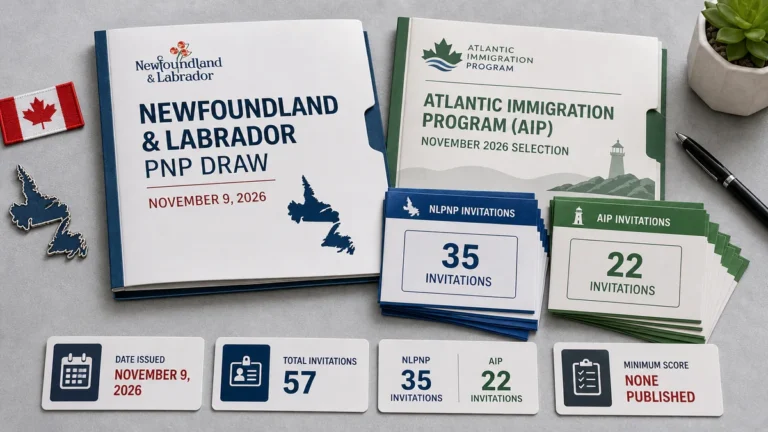
Newfoundland and Labrador Issues 57 NLPNP & AIP Invitations

PEI PNP Draw Invites 192 on November 9, 2026

Canada Accelerates Hong Kong and Ukraine PR Applications
Express Entry LMIA exemption policy starts in 2026