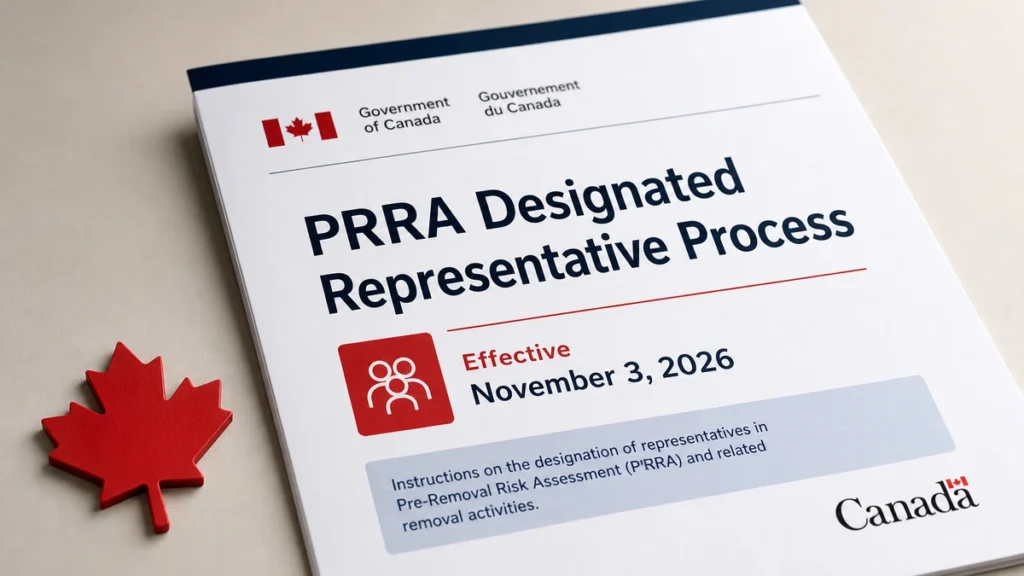
IRCC’s new PRRA designated representative process took effect on November 3, 2026. It provides for representatives to be appointed in prescribed circumstances for people under 18 and adults who cannot appreciate the nature of an application or proceeding during certain removal-related processes. IRCC Program Delivery Updates also revised Pre-Removal Risk Assessment (PRRA) bar guidance to include refugee protection claims determined by the Minister to be withdrawn.
What changed in the instructions
The update created instructions on designating representatives in PRRA and related removal activities. It applies to PRRA applications, proceedings concerning non-refoulement protection, removal-order enforcement proceedings and danger opinion proceedings.
The reforms follow changes to the in-Canada asylum system under the Strengthening Canada’s Immigration Systems and Borders Act and associated regulatory changes. The Act received Royal assent on March 26, 2026, while the asylum-system changes came into effect on November 3, 2026.
The updated PRRA intake guidance also states that a person whose refugee protection claim was determined by the Minister to be withdrawn is subject to the 12-month PRRA bar.
Who may need a designated representative
A designated representative is intended to protect a person’s interests and support meaningful participation when the person cannot represent themselves. IRCC will appoint one in prescribed circumstances for a person under 18 or for an adult whom the Minister considers unable to appreciate the nature of the proceeding or application.
For a minor, the representative will usually be a parent, but may also be another family member, legal guardian or person responsible for the child, friend, or an agency worker. For an adult unable to appreciate the nature of the process, a family member, friend or agency worker may act in the role.
Where no suitable person is available, IRCC may contract an individual willing and able to act as a designated representative.
- The representative must be at least 18, able to appreciate the nature of the proceeding or application, and free of a conflict of interest.
- IRCC officers are instructed to assess the need for a representative as early as practicable.
- Where possible, the same representative should follow the person through related proceedings or applications.
How the role applies to PRRA files
For PRRA applications, a designated representative may already have been appointed by the Canada Border Services Agency at PRRA initiation. If a PRRA hearing is required, a representative appointed at initiation acts for the full PRRA process, including the hearing.
The representative may help the person understand the process, make decisions where the person is capable, consider or retain counsel where authorized, gather and present evidence, and sign related documents if the person cannot do so. The representative must act in the person’s best interests.
A designated representative is not legal counsel. A person may also retain legal counsel or another adviser at their own expense.
PRRA bar guidance for withdrawn claims
The revised PRRA intake instructions list a refugee protection claim determined by the Minister to be withdrawn among the decisions that make a person ineligible to apply for a PRRA for 12 months.
For this category, the PRRA bar calculation date is the date the Minister determines the refugee protection claim to be withdrawn. The instructions state that the last day of the bar is the day before the 12-month anniversary of that decision date.
This is an operational change to PRRA-bar assessments. It does not mean that every person with a withdrawn claim will have identical circumstances or options.
Practical file considerations
People involved in a PRRA, danger opinion or removal process may need to consider whether a child or an adult with limited ability to understand the process requires a designated representative. Officers must assess whether the need exists based on current information and facts.
The updated instructions also allow a designation to be revoked if the person can appreciate the proceeding or application, if the representative is not acting in the person’s best interests, or if the representative is otherwise unsuitable.
Source: IRCC Program Delivery Updates
Disclaimer
Maplevisa provides Canadian immigration news and information for general informational purposes only. Content is not legal or immigration advice and should not be relied upon as a substitute for advice based on your individual circumstances. Immigration laws, policies, programs, and procedures may change. Where applicable, readers should consult the relevant official government or legal source for current information.
More Immigration News

Start-Up Visa Priority Processing: IRCC’s 3 Tiers

Alberta AAIP Issues 525 Invitations in 6 Rounds
Canada Immigration Announcement on November 12, 2026

Canada’s worker retention measure announced in Budget 2026

Budget 2026 investments highlighted in Thunder Bay
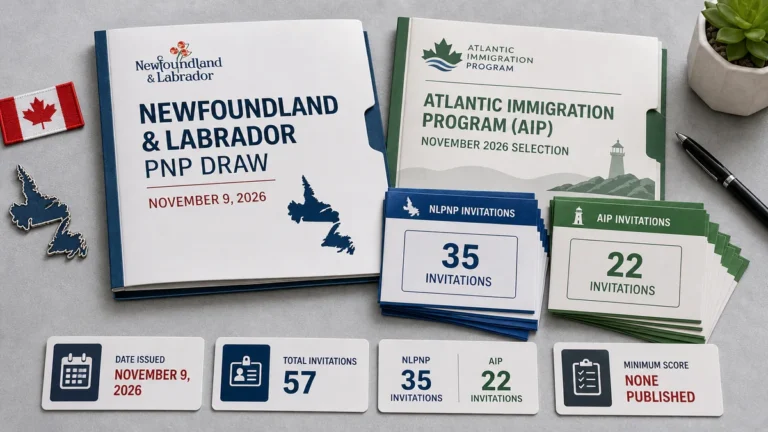
Newfoundland and Labrador Issues 57 NLPNP & AIP Invitations
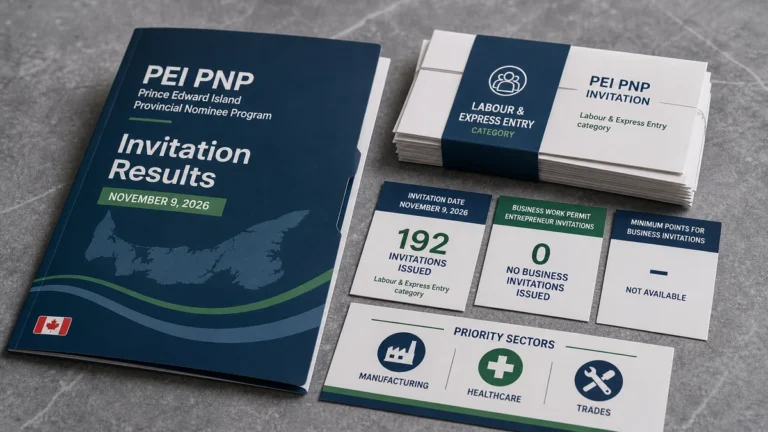
PEI PNP Draw Invites 192 on November 9, 2026
Canada Accelerates Hong Kong and Ukraine PR Applications
Express Entry LMIA exemption policy starts in 2026