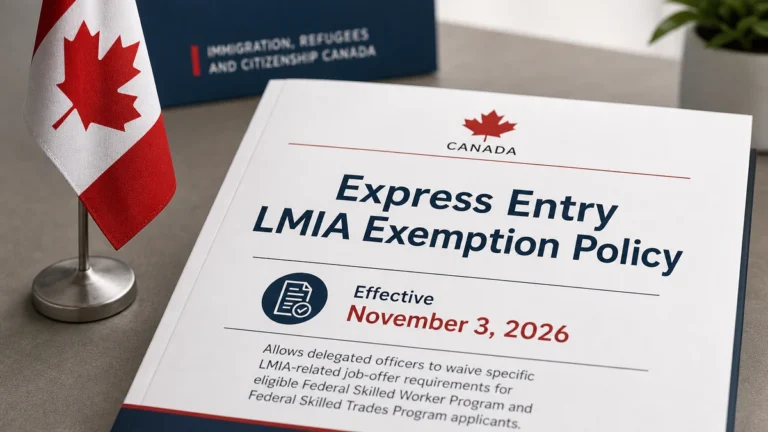
An H&C Refusal Upheld Over Grandchildren’s Best Interests means Surjit Singh Sidhu and Jasmel Kaur Sidhu’s challenge to the refusal of their permanent residence application was dismissed. The Federal Court found the immigration officer reasonably assessed the applicants’ establishment, hardship on return to India and the best interests of their three Canadian-born grandchildren.

Case Summary
- Case & citation: Sidhu v. Canada (Citizenship and Immigration), 2026 FC 1380; Court file IMM-19449-24.
- Decision date & judge: November 12, 2026, by Mr. Justice Joyal.
- Issue: Whether an officer unreasonably refused the applicants’ in-Canada H&C permanent residence application under subsection 25(1) of the IRPA.
- Outcome: The application for judicial review was dismissed, leaving the October 4, 2024 H&C refusal in place.
H&C application relied on family ties
The applicants, citizens of India, lived in Ontario with their son, daughter-in-law and three minor grandchildren. They applied for permanent residence on H&C grounds in January 2023.
They relied on their establishment in Canada, their role in helping the children’s household, the grandchildren’s best interests and hardship associated with returning to India. They had first entered Canada in June 2016 and had returned to India twice since then.
A Senior Immigration Officer refused the application in October 2024, finding that the circumstances did not justify exceptional H&C relief.
Court reviewed the officer’s assessment
Justice Joyal applied the reasonableness standard of review. The Court emphasized that judicial review does not permit it to reweigh evidence considered by the decision maker.
The applicants filed letters, affidavits and submissions referring to events after the H&C decision. The Court did not consider those materials because they sought to supplement the record that was before the officer and did not fall within an exception to the usual rule limiting review to that record.
On establishment, the officer recognized the applicants had spent about seven years in Canada but found little evidence of involvement outside their immediate family. The Court found it was open to the officer to give limited weight to general statements about volunteering that lacked particulars or corroborating evidence.
The Court also found it reasonable for the officer to conclude that a return to India was feasible. The officer considered the applicants’ past returns to India, their ability to support themselves there through farming, their familiarity with the country, possible ongoing financial support from their son and the presence of siblings in India.
Grandchildren’s interests were reasonably considered
The applicants argued that they helped prepare meals, transport the children, supervise them and pass on Punjabi language, Sikh religious values and cultural knowledge. They said the parents’ demanding work schedules made their assistance important.
The officer accepted that the grandparents’ support and relationship with the children were positive factors. However, the officer found insufficient evidence that the applicants were the children’s primary caregivers, that the parents could not provide care or arrange alternatives, or that the applicants’ departure would be contrary to the children’s best interests.
Justice Joyal rejected the argument that the officer had required proof of unusual hardship or used an improper basic-needs threshold. The Court found the officer identified the children’s interests, assessed the likely effect of the applicants’ departure and remained alert, alive and sensitive to those interests.
The Court noted that family separation and emotional bonds alone do not establish that H&C relief is warranted. In this case, the record did not demonstrate caregiving responsibilities, interdependency or particularized needs beyond the ordinary family relationship.
Temporary immigration options were relevant
The officer also considered that the applicants had previously used super visas and found no evidence they would be unwilling or unable to obtain authorization to visit family in Canada in the future.
The Court agreed that standard immigration channels could be considered as one factor in the H&C analysis. It stressed that temporary resident status is not the same as permanent residence, but found the evidence did not show that available options were insufficient to address the applicants’ circumstances.
The decision does not grant permanent residence or direct a new H&C assessment. It confirms that, on the record before the officer, the refusal met the requirements of justification, transparency and intelligibility.
Source: Federal Court Decisions
Disclaimer
Maplevisa provides Canadian immigration news and information for general informational purposes only. Content is not legal or immigration advice and should not be relied upon as a substitute for advice based on your individual circumstances. Immigration laws, policies, programs, and procedures may change. Where applicable, readers should consult the relevant official government or legal source for current information.
More Immigration News
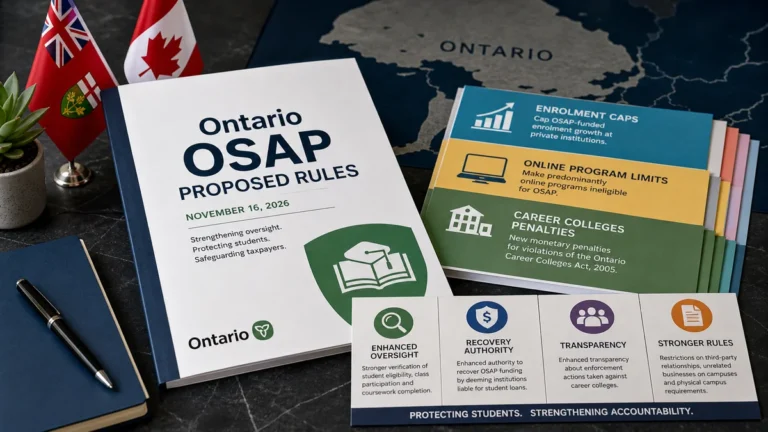
Ontario proposes OSAP rules for private institutions

Start-Up Visa Priority Processing: IRCC’s 3 Tiers

Alberta AAIP Issues 525 Invitations in 6 Rounds

Canada Immigration Announcement on November 12, 2026
Canada’s worker retention measure announced in Budget 2026

Budget 2026 investments highlighted in Thunder Bay
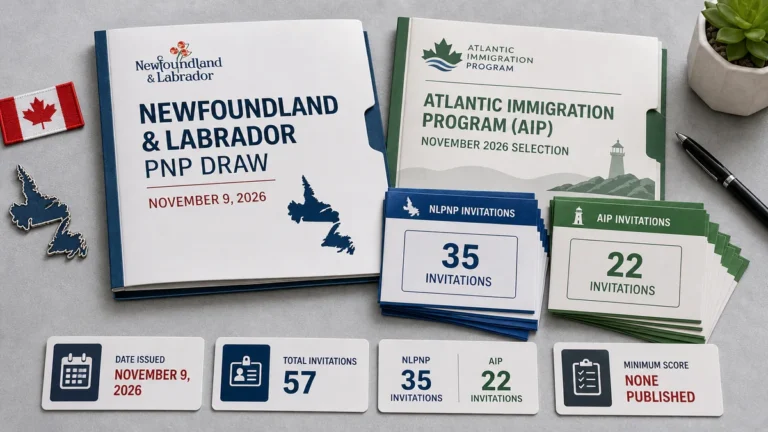
Newfoundland and Labrador Issues 57 NLPNP & AIP Invitations

PEI PNP Draw Invites 192 on November 9, 2026
Canada Accelerates Hong Kong and Ukraine PR Applications