A Protected Person PR Mandamus application has been granted after the Federal Court found IRCC had not adequately justified a prolonged delay in deciding a Russian family’s permanent residence application. IRCC must render a decision within 90 days of the November 10, 2026 judgment.

Case Summary
- Case & citation: Bisultanov Et Al. v. Canada (Citizenship and Immigration), 2026 FC 1375, Court file IMM-19144-25.
- Decision date & judge: November 10, 2026, before Justice Giuseppina D’Agostino.
- Issue: The applicants sought mandamus requiring IRCC to decide their protected-person permanent residence application, submitted in May 2021.
- Outcome: The application for mandamus was granted, and IRCC was ordered to decide the permanent residence application within 90 days.
IRCC application remained pending during security screening
The applicants, citizens of Russia, were recognized as Convention refugees on March 30, 2021. IRCC received their application for permanent residence as protected persons on May 27, 2021.
IRCC sought further information about government employment in 2022, which the applicants provided shortly afterward. The department referred the file for external security screening in August 2022.
Between October 2022 and March 2026, the applicants, their representatives and their Member of Parliament made at least eight inquiries. IRCC repeatedly said security screening was ongoing and did not provide an estimated completion date.
The Court noted that the average processing time when the application was submitted was 28 months. At the date of judgment, the application had been in process for about 65 months.
Court found an implied refusal to act
Justice D’Agostino assessed whether the delay was unreasonable using the three-part Conille test: whether it exceeded what the process required, whether the applicants caused the delay, and whether the responsible authority provided a satisfactory justification.
The Court found the substantial difference between the published average processing time and the actual processing period supported a prima facie finding that the delay exceeded what the process required. It also found the record did not show that the applicants were responsible for the extended delay.
IRCC issued a procedural fairness letter shortly before the hearing, raising possible security inadmissibility concerns connected with the principal applicant’s former employment. The Court accepted that security screening serves an important statutory purpose, particularly where potential inadmissibility is at issue.
However, the Court found IRCC had not adequately explained why security screening continued for more than four years after the principal applicant disclosed the employment information, or why the concerns were raised only shortly before the hearing. The delay therefore amounted to an implied refusal to act.
Order requires a decision, not approval
The Court found that the balance of convenience favoured mandamus. It held that significant prejudice is not a prerequisite for this remedy and that advancing an application ahead of others does not automatically prevent relief.
The judgment recognizes that IRCC must assess the applicants’ response to the procedural fairness letter and resolve the outstanding admissibility concerns. Mandamus compels IRCC to make a decision; it does not require a particular decision on the permanent residence application.
The Court gave IRCC 90 days from the judgment date to decide the application, rather than the 60 days requested by the applicants.
Source: Federal Court Decisions
Disclaimer
Maplevisa provides Canadian immigration news and information for general informational purposes only. Content is not legal or immigration advice and should not be relied upon as a substitute for advice based on your individual circumstances. Immigration laws, policies, programs, and procedures may change. Where applicable, readers should consult the relevant official government or legal source for current information.
More Immigration News
Canada Accelerates Hong Kong and Ukraine PR Applications
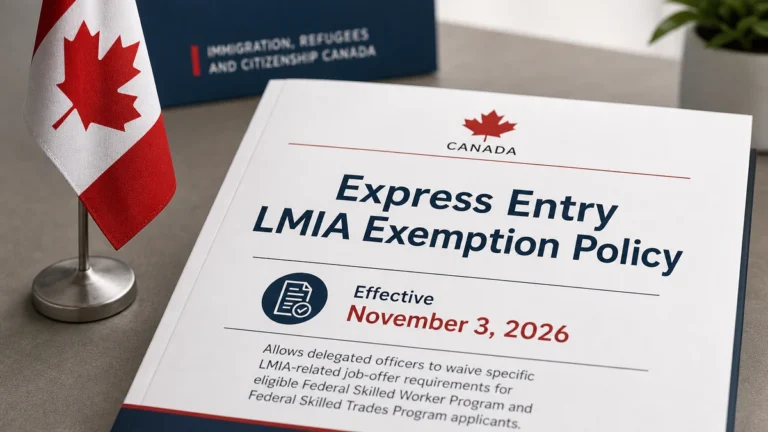
Express Entry LMIA exemption policy starts in 2026

Canada Immigration Processing Times on 10 November 2026

C11 & ICT CRS Points: 2026 Rules for Business Owners

Rural Community Immigration Program becomes permanent

Apply for Canadian Citizenship Online or on Paper

Alberta AAIP Issues 425 Invitations in 5 Rounds

Manitoba PNP Draw 283 Issues 526 Invitations Nov. 5, 2026

Canada’s 2027–2029 Immigration Levels Plan: What Changes