A Federal Court judge dismissed a refugee claim credibility challenge by Indian citizens after finding the Refugee Appeal Division reasonably relied on omissions and other credibility concerns in refusing their claims. The decision, issued November 9, 2026, leaves the refugee appeal decision in place.

Case Summary
- Case & citation: Saini c. Canada (Citoyenneté et Immigration), 2026 CF 1369, Court file IMM-11586-25.
- Decision date & judge: November 9, 2026, by Associate Chief Justice Martine St-Louis.
- Issue: The applicants challenged the Refugee Appeal Division’s credibility findings and its refusal of their refugee protection claims.
- Outcome: Judicial review was dismissed without costs; no question was certified.
Refugee appeal decision was based on several concerns
The applicants entered Canada in 2023 and claimed refugee protection, alleging risk in India because the principal applicant had participated in opposition political demonstrations.
The Refugee Protection Division refused the claims on credibility grounds. On appeal, the Refugee Appeal Division found that two proposed new documents were inadmissible and concluded there was not credible or sufficient evidence that the applicants had been threatened or attacked because of opposition political activity.
Among its concerns, the Refugee Appeal Division found that the principal applicant had not established a profile of someone who would be targeted for political activity. It also questioned the circumstances in which the principal applicant’s father’s affidavit was prepared and found that other affidavits did not resolve the credibility concerns.
Omitted threats were not peripheral
Before the Court, the applicants challenged one credibility finding: the principal applicant had testified about three threats made through family members while he was in Singapore, but those incidents were not included in either the original or amended Basis of Claim form.
They argued that the omission involved peripheral details and that the Refugee Appeal Division had unreasonably rejected their explanations. The Minister maintained that the decision was reasonable, evidence-based and justified.
The Court found it was reasonable to treat the alleged threats as central rather than minor. The threats could have shown a continuing interest in the principal applicant by the alleged agents of risk, yet the applicants had confirmed that their forms were accurate and complete while represented in their refugee proceedings.
The judge also noted that the Refugee Appeal Division had considered the applicants’ explanations but did not accept them. Reweighing that evidence was not the Court’s role on judicial review.
Other unchallenged findings supported the result
The Court applied the reasonableness standard of review to the Refugee Appeal Division’s credibility assessment. It noted that credibility findings by the Refugee Protection Division and Refugee Appeal Division are owed significant deference.
Even if the omission concerning the threats had been peripheral, the Court found that the other, unchallenged credibility and profile findings remained sufficient to support the refugee appeal decision.
The Court concluded that the applicants had not shown the Refugee Appeal Division’s decision was unreasonable. It found the decision was based on a coherent and rational analysis justified by the legal and factual constraints of the case.
Affidavit received no weight
The Court also gave no probative value to the principal applicant’s affidavit. Counsel confirmed that the applicant did not understand French, but the affidavit was written in French and did not state that it had been orally translated to the affiant as required by the Federal Courts Rules.
The judge described that translation requirement as more than a technical detail because it helps ensure an affiant has received an accurate and reliable oral translation of the affidavit’s content.
Source: Federal Court Decisions
Disclaimer
Maplevisa provides Canadian immigration news and information for general informational purposes only. Content is not legal or immigration advice and should not be relied upon as a substitute for advice based on your individual circumstances. Immigration laws, policies, programs, and procedures may change. Where applicable, readers should consult the relevant official government or legal source for current information.
More Immigration News
Canada Accelerates Hong Kong and Ukraine PR Applications
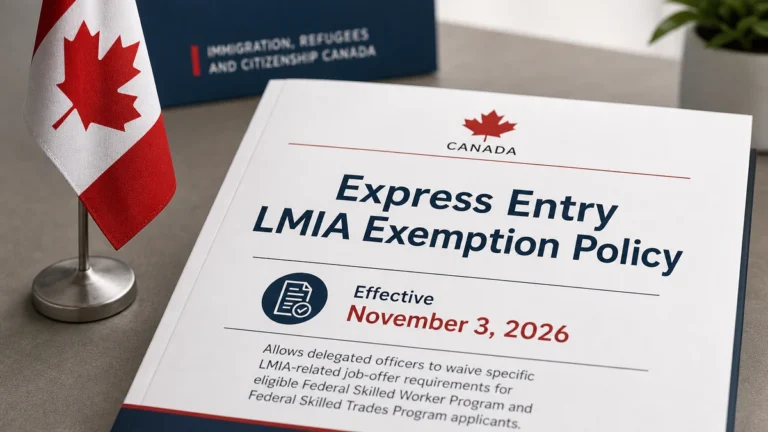
Express Entry LMIA exemption policy starts in 2026

Canada Immigration Processing Times on 10 November 2026

C11 & ICT CRS Points: 2026 Rules for Business Owners

Rural Community Immigration Program becomes permanent

Apply for Canadian Citizenship Online or on Paper

Alberta AAIP Issues 425 Invitations in 5 Rounds

Manitoba PNP Draw 283 Issues 526 Invitations Nov. 5, 2026

Canada’s 2027–2029 Immigration Levels Plan: What Changes