
The Federal Court dismissed a Colombian claimant’s judicial review application after finding the Refugee Appeal Division reasonably concluded she had not shown a personalized risk in Colombia. The refugee claim family relationship argument had not been raised before the Refugee Protection Division or the RAD, the Court found.

Case Summary
- Case & citation: Rangel v. Canada (Citizenship and Immigration), 2026 FC 1294; Court file IMM-8974-25.
- Judge: Mr. Justice Joyal.
- Issue: Judicial review of the RAD’s dismissal of the applicant’s refugee appeal, including her alleged risk as a woman and family member of Afro-Colombians.
- Outcome: The application for judicial review was dismissed; the RAD’s decision dismissing the applicant’s appeal remains in place.
RAD reached different results for the family members
The applicant, her husband and her daughter, all citizens of Colombia, arrived in Canada and made refugee claims on January 23, 2024. The applicant based her claim on a fear of illegal armed groups, connected to her childhood experience as a victim of armed conflict and reports of renewed FARC activity in 2023.
The Refugee Protection Division rejected all three claims on November 28, 2024. It found the risks from armed groups and instability in Colombia were generalized rather than personalized, and found that the discrimination experienced by the applicant’s husband and daughter did not cumulatively amount to persecution.
On March 18, 2025, the RAD allowed the husband’s and daughter’s appeals. It found they were Convention refugees because of their Afro-Colombian identity and the cumulative discrimination they would face. However, it dismissed the applicant’s appeal, finding she had not faced personal risk, targeting or threats in years and had not shown a current, forward-looking personalized risk.
Court found the RAD reasonably assessed personal risk
The applicant argued that the RAD failed to assess whether she faced persecution based on membership in a particular social group, as a woman or as a member of a family comprising Afro-Colombians. Justice Joyal did not accept that argument.
The Court found that her claim before the RPD and RAD had been framed as a general fear of illegal armed groups. Her written narrative and testimony focused on her childhood displacement during clashes involving government and guerrilla groups, as well as her fear arising from renewed activity in 2023.
The Court held that the RAD was not required to formulate and assess a new particular-social-group theory that the applicant had not advanced. It also found the RAD had considered her allegations using the Immigration and Refugee Board’s gender guideline and reasonably concluded that her subjective fear was not objectively well founded.
Relatives’ refugee status did not establish her claim
Justice Joyal added that, even if the family-relationship argument had been made before the RAD, it would not have led to the applicant being recognized as a Convention refugee on the evidence before the decision-maker.
The Court said a claimant relying on a family relationship must establish a personal connection to the alleged persecution. The applicant’s husband and daughter succeeded because of their own Afro-Colombian racial identity, which the applicant did not share.
The fact that other family members demonstrated a well-founded fear of persecution did not automatically establish a corresponding risk for the applicant. In the absence of evidence that she herself had been or would be targeted because of her family relationship, the RAD’s different outcome was legally coherent and supported by the evidence.
Missing affidavit did not end the judicial review
The applicant’s judicial review record did not include an affidavit. She later attempted to file a declaration shortly before the hearing, but it was not accepted because she had not sought the Court’s leave and the document did not comply with the Court’s rules.
Although the respondent argued that the missing affidavit was fatal, the Court declined to dismiss the application on that basis. Justice Joyal found the applicant relied only on facts in the Certified Tribunal Record, including her testimony before the RPD.
The parties agreed that reasonableness was the applicable standard of review for the RAD’s merits decision. The Court concluded the applicant had not shown that the RAD’s assessment was unreasonable.
Source: Federal Court Decisions
Disclaimer
Maplevisa provides Canadian immigration news and information for general informational purposes only. Content is not legal or immigration advice and should not be relied upon as a substitute for advice based on your individual circumstances. Immigration laws, policies, programs, and procedures may change. Where applicable, readers should consult the relevant official government or legal source for current information.
More Immigration News

BC PNP Skills Draw Issues 772 ITAs on October 29, 2026

IRCC Changes LMIA Concurrent Processing

Express Entry Draw 453 Transport on October 28, 2026
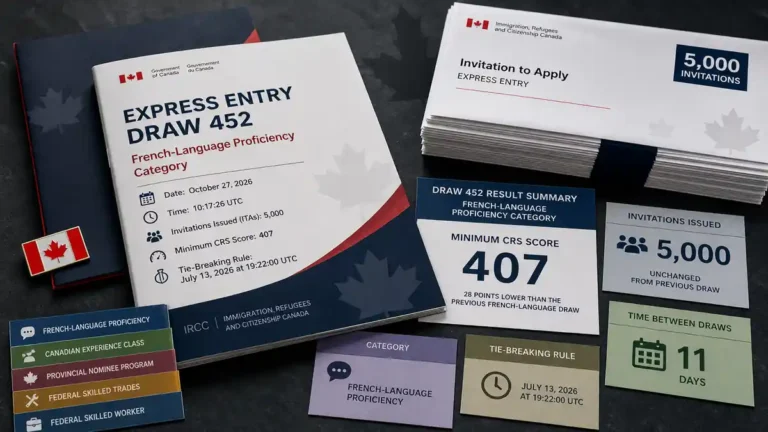
Express Entry Draw 452 French-Language on October 27, 2026
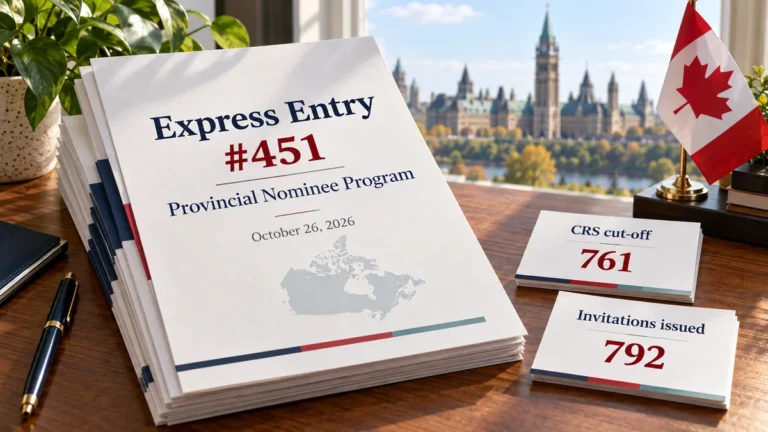
Express Entry Draw 451 PNP on October 26, 2026

Alberta AAIP draws: five rounds, October 9–20, 2026

List High-Wage Occupations for Express Entry

Manitoba PNP invites 1,304 candidates in October 22, 2026 draw

BC PNP Entrepreneur Draw, October 20, 2026