
The Federal Court dismissed an IFA risk-standard challenge brought by an Indian refugee claimant after finding that the Refugee Appeal Division reasonably assessed his claim under the higher balance-of-probabilities standard in IRPA section 97(1).

Case Summary
- Case & citation: Marimuthu v. Canada (Citizenship and Immigration), 2026 FC 1316, Court file IMM-3398-25.
- Decision date & judge: October 27, 2026, before Mr. Justice Brouwer.
- Issue: The applicant challenged the risk standard used in the RAD’s internal flight alternative assessment for New Delhi.
- Outcome: The judicial-review application was dismissed, and no question was certified.
RAD decision followed rejection of refugee claim
Mahadevan Marimuthu, a national of India, sought judicial review of a February 5, 2025 decision of the Refugee Appeal Division (RAD). The RAD had dismissed his refugee-protection appeal after the Refugee Protection Division found that he had a viable internal flight alternative (IFA) in New Delhi.
Before coming to Canada, Mr. Marimuthu lived in Alankadu, Tamil Nadu, where he owned a fishpond. He alleged that a police official, the official’s uncle and Tamil Nadu police were involved in events that led to his arrest, assault and forced transfer of the fishpond.
The RAD found that the harm feared by Mr. Marimuthu did not have a nexus to a Refugee Convention ground under section 96 of the Immigration and Refugee Protection Act. It therefore assessed the claim under section 97(1) of the IRPA.
Applicant challenged the IFA risk standard
On judicial review, Mr. Marimuthu raised one argument: that the RAD had unreasonably used a balance-of-probabilities standard when considering whether the alleged agents of harm would be motivated to find and harm him in New Delhi.
He argued that the lower serious-possibility standard should have applied. However, he did not challenge the RAD’s finding that his claim lacked a nexus to a Refugee Convention ground, nor did he challenge the RAD’s conclusion that it was reasonable for him to relocate to New Delhi.
Court finds section 97(1) standard applied reasonably
Justice Brouwer reviewed the RAD decision on the reasonableness standard. The Court noted that a claimant facing a proposed IFA must show either a serious possibility of persecution or harm in that location, or that relocation there would be unreasonable in all the circumstances.
The Court found that Mr. Marimuthu’s argument did not account for the RAD’s unchallenged conclusion that the claim was assessed under section 97(1), rather than section 96. Under section 97(1), claimants must establish a risk of torture, death, or cruel and unusual treatment or punishment on a balance of probabilities.
Mr. Marimuthu did not provide authority supporting the proposition that a lower risk standard should apply specifically to the IFA analysis in a section 97(1) claim. The Court therefore found no error in the RAD’s use of the higher standard when assessing whether the alleged agents of harm would be motivated to locate him in New Delhi.
No certified question
The applicant had proposed a question for certification under the IRPA. During oral argument, his counsel conceded that the question should not be certified if the Court found that the RAD had assessed the claim under section 97(1), rather than section 96.
Having reached that conclusion, the Court declined to certify the question.
Source: Federal Court Decisions
Disclaimer
Maplevisa provides Canadian immigration news and information for general informational purposes only. Content is not legal or immigration advice and should not be relied upon as a substitute for advice based on your individual circumstances. Immigration laws, policies, programs, and procedures may change. Where applicable, readers should consult the relevant official government or legal source for current information.
More Immigration News

Canada Immigration Processing Times on 1 November 2026

BC PNP Skills Draw Issues 772 ITAs on October 29, 2026

IRCC Changes LMIA Concurrent Processing
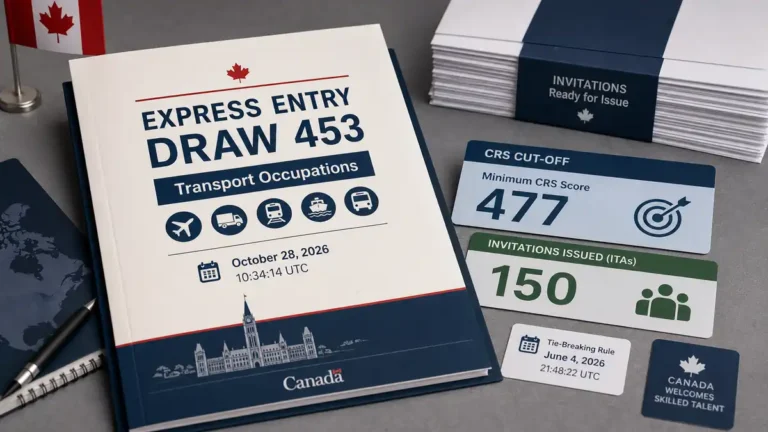
Express Entry Draw 453 Transport on October 28, 2026
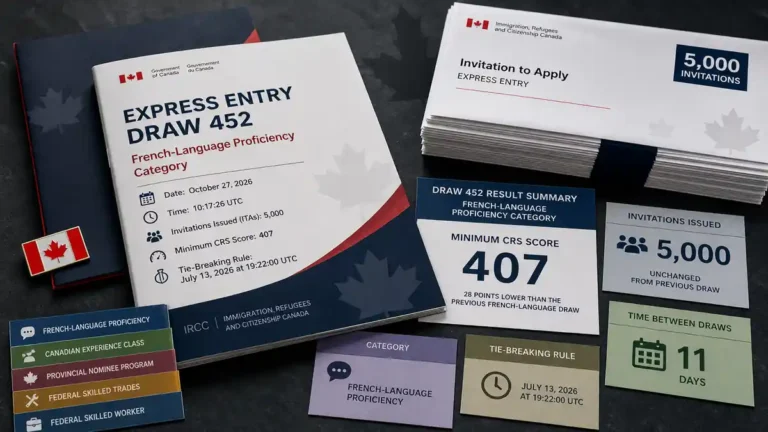
Express Entry Draw 452 French-Language on October 27, 2026
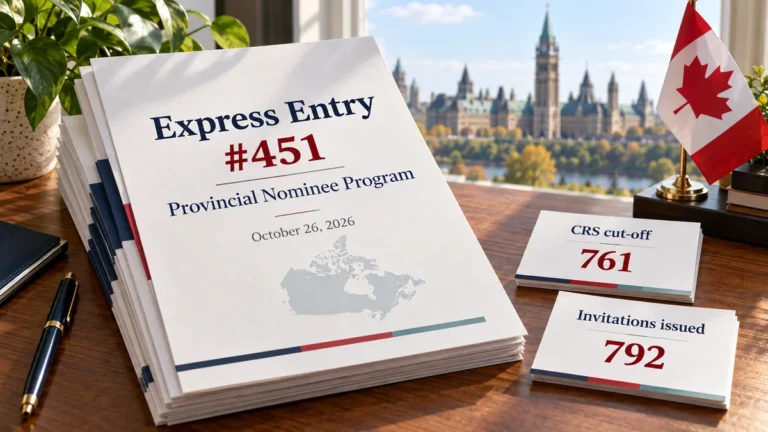
Express Entry Draw 451 PNP on October 26, 2026

Alberta AAIP draws: five rounds, October 9–20, 2026

List High-Wage Occupations for Express Entry

Manitoba PNP invites 1,304 candidates in October 22, 2026 draw