The Federal Court allowed judicial review of a study permit refusal over funds after finding the visa officer did not address financial evidence that contradicted the conclusion that the applicant was not financially established. The decision, released November 6, 2026, concerned a Nigerian citizen’s application to study at Fanshawe College.
Case Summary
- Case & citation: Agha v. Canada (Citizenship and Immigration), 2026 FC 1364, Court file IMM-8997-25.
- Decision date & judge: November 6, 2026, by Madam Justice Azmudeh.
- Issue: The Court reviewed the refusal of a study permit application, principally over the applicant’s financial establishment and the source of funds.
- Outcome: The application for judicial review was allowed because the officer’s decision was found unreasonable.
Study permit application and refusal
Mr. Obed Agha applied to attend an eight-month Graduate Certificate Program in Marketing Management at Fanshawe College in London, Ontario. It was his third study permit application; his 2023 and 2024 applications had been refused over concerns about the source of his funds.
For the 2025 application, Agha said some of the available funds came from his work at his mother’s business, where he had worked since 2017. He also said his parents and siblings provided financial support. His materials included his mother’s affidavit, corporate documents, transaction receipts and the business’s tax records.
He had initially deposited $15,000 in a Canadian guaranteed investment certificate in 2023 and later transferred further funds, bringing the GIC balance to about $25,000 for the 2025 application. He also submitted evidence that $17,258.54 of the $18,067.34 tuition amount had been paid.
The officer was not satisfied that Agha would leave Canada at the end of his authorized stay. The refusal cited his employment situation and assets and financial situation, finding that he was not financially established in Nigeria and that his finances were insufficient for the stated travel purpose.
Court finds officer overlooked contrary evidence
Justice Azmudeh reviewed the refusal on the reasonableness standard. The Court noted that visa officers have broad discretion in study permit assessments and that applicants seeking temporary entry bear the onus of satisfying an officer they will leave Canada at the end of their authorized stay.
However, the Court found that the officer’s Global Case Management System notes focused on Agha’s finances and did not identify other concerns relevant to whether he would leave Canada. The officer did not challenge the credibility of his evidence.
The Court held that the officer overlooked evidence that more than $32,000 in GIC funds and paid tuition had remained untouched in Canada for more than two years while Agha reapplied. Although the officer could have assigned that evidence little weight, the Court said the officer had to grapple with evidence pointing to the opposite conclusion.
Because the reasons did not show meaningful engagement with that contradictory evidence, Justice Azmudeh found the decision arbitrary, unintelligible, unjustified and opaque. The Court therefore found it unreasonable.
Having reached that conclusion, the Court did not address Agha’s procedural fairness arguments. Neither party proposed a question for certification, and the Court agreed that none arose.
What the decision addresses
The judgment concerns the adequacy of the reasons in this study permit refusal and the officer’s treatment of the evidentiary record. It does not make a broader finding about the sufficiency of financial evidence in all study permit applications.
Source: Federal Court Decisions
Disclaimer
Maplevisa provides Canadian immigration news and information for general informational purposes only. Content is not legal or immigration advice and should not be relied upon as a substitute for advice based on your individual circumstances. Immigration laws, policies, programs, and procedures may change. Where applicable, readers should consult the relevant official government or legal source for current information.
More Immigration News

Apply for Canadian Citizenship Online or on Paper

Alberta AAIP Issues 425 Invitations in 5 Rounds
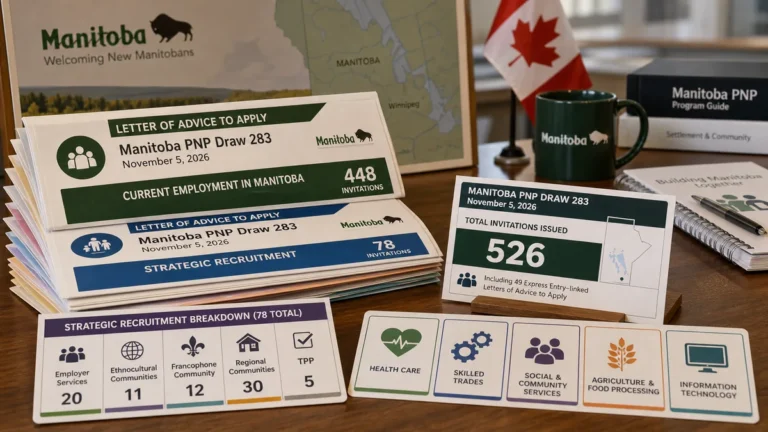
Manitoba PNP Draw 283 Issues 526 Invitations Nov. 5, 2026

Canada’s 2027–2029 Immigration Levels Plan: What Changes
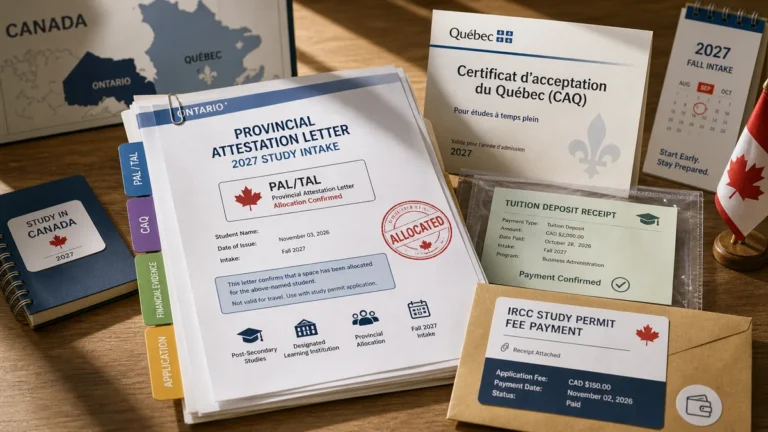
Apply for Canada Study Permit 2027
CRS Points Express Entry: November 3 Changes
Haiti Open Work Permit Renewals Policy
Sudan Open Work Permit Renewal Policy in Canada

Canada Immigration Processing Times on 1 November 2026