A work permit refusal over financial evidence was set aside after the Federal Court found that an IRCC officer overlooked critical information about an Iranian family’s overall financial resources. The applications will be reconsidered by a different officer after the family has a reasonable opportunity to provide updated information.

Case Summary
- Case & citation: Taremi Et Al. v. Canada (Citizenship and Immigration), 2026 FC 1349, Court file IMM-8640-25.
- Decision date & judge: November 3, 2026, Justice Janet M. Fuhrer.
- Issue: The Court reviewed IRCC’s refusal of a Temporary Foreign Worker Program work permit and accompanying open work permit and study permit applications.
- Outcome: Judicial review was granted; the March 24, 2025 refusals were set aside and remitted to a different IRCC officer for redetermination, with no costs.
IRCC refused the family’s applications over finances
Fatemeh Taremi, her spouse Moslem Hakimi and their dependent child are a family of three from Iran. Ms. Taremi applied for a work permit under the Temporary Foreign Worker Program after receiving a job offer supported by a positive labour market impact assessment. Her spouse applied for an open work permit and their child applied for a study permit as accompanying family members.
An IRCC officer refused the applications after finding that Ms. Taremi had not shown she would leave Canada at the end of her authorized stay. The officer concluded that her financial situation was insufficient to support her travel and that of her accompanying family members.
The applicants sought judicial review, arguing that the decision was unreasonable and that procedural fairness was breached because they were not given an opportunity to respond to the officer’s concerns. Justice Fuhrer found the decision unreasonable and did not address the procedural-fairness argument.
Court found key financial evidence was overlooked
The Court held that the officer overlooked critical evidence concerning the family’s overall financial resources. The reasons did not address proceeds from the sale of Ms. Taremi’s vehicle, the family’s savings or rental income from their house in Iran.
Justice Fuhrer also found it unreasonable to disregard the spouse’s contribution. Ms. Taremi’s work plan had quantified and relied on his savings as part of the application.
The respondent argued that the applicants had not supplied a six-month transaction history for Bank Mellat balances, as required by an Ankara Visa Office Additional Document Checklist. The Court found that this was not a justification given in the officer’s reasons or GCMS notes. The checklist itself was also not properly before the Court because the respondent had provided only a link rather than submitting it through affidavit evidence.
Although the officer acknowledged that the Bank Mellat account showed a large sum of funds, the reasons did not explain why Ms. Taremi’s detailed explanation of the funds’ provenance was insufficient. The Court found that the officer failed to grapple with contrary banking and income evidence.
Ties to Iran were not addressed
The Court further found that the officer’s conclusion that Ms. Taremi would not leave Canada at the end of her stay was unreasonable. The reasons disclosed no concern other than the sufficiency of funds.
The officer did not engage with evidence of Ms. Taremi’s ties to Iran, including her home, employment, family ties and prior travel. In the absence of evidence pointing to a risk that she would not leave Canada, the Court held that the officer was required to justify that conclusion.
Applications return for redetermination
The Court set aside IRCC’s March 24, 2025 decisions and ordered that all three applications be redetermined by a different officer. Before that review, the applicants must receive a reasonable opportunity to provide updated information supporting their applications.
The judgment does not grant the work permit, open work permit or study permit applications. It requires a new assessment by IRCC. Neither party proposed a serious question of general importance for certification, and the Court awarded no costs.
Source: Federal Court Decisions
Disclaimer
Maplevisa provides Canadian immigration news and information for general informational purposes only. Content is not legal or immigration advice and should not be relied upon as a substitute for advice based on your individual circumstances. Immigration laws, policies, programs, and procedures may change. Where applicable, readers should consult the relevant official government or legal source for current information.
More Immigration News
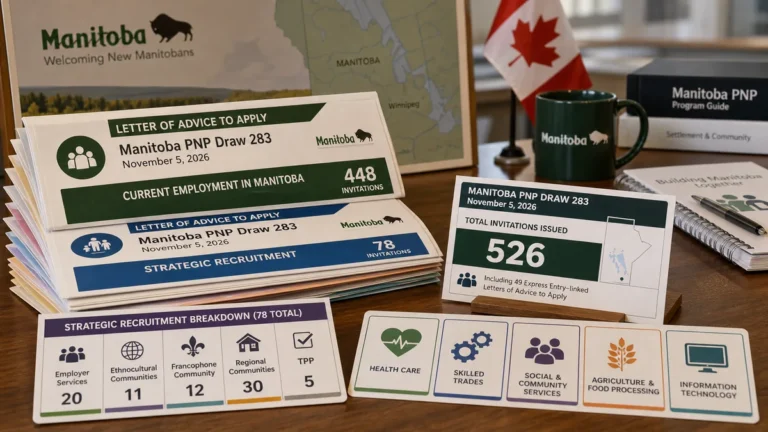
Manitoba PNP Draw 283 Issues 526 Invitations Nov. 5, 2026

Canada’s 2027–2029 Immigration Levels Plan: What Changes
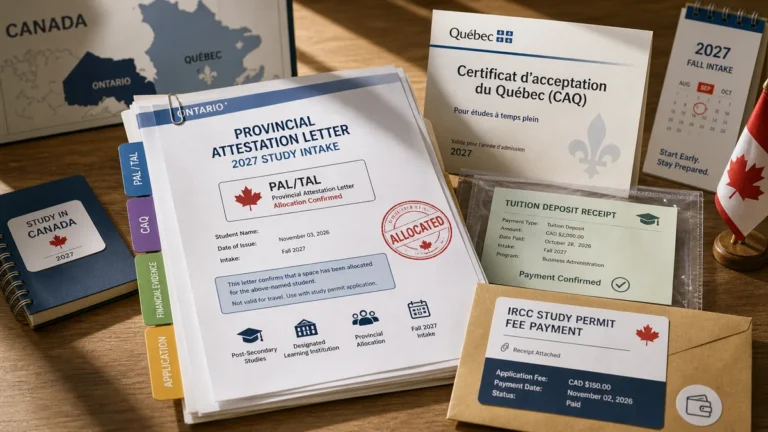
Apply for Canada Study Permit 2027
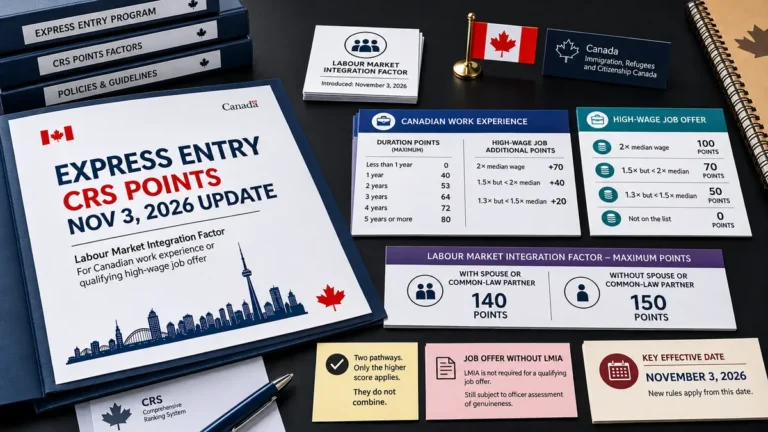
CRS Points Express Entry: November 3 Changes
Haiti Open Work Permit Renewals Policy
Sudan Open Work Permit Renewal Policy in Canada

Canada Immigration Processing Times on 1 November 2026
BC PNP Skills Draw Issues 772 ITAs on October 29, 2026

IRCC Changes LMIA Concurrent Processing