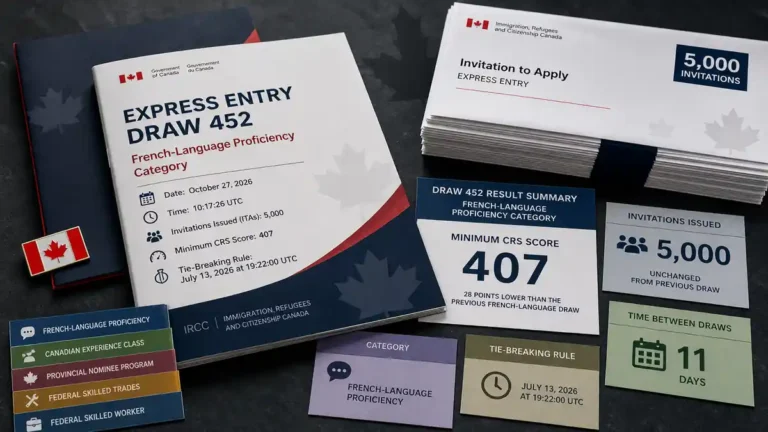
Canada’s 2027–2029 Immigration Levels Plan keeps annual targets at 370,000 new temporary resident arrivals and 380,000 permanent resident admissions from 2027 through 2029. Announced on November 5, 2026, it shifts more economic admissions toward provincial and regional pathways while adding a time-limited transition measure for up to 200,000 people already in Canada.

2027–2029 Immigration Levels Plan at a Glance
The 2027–2029 Immigration Levels Plan extends the lower, stable admission levels first signalled in the 2026–2028 plan. Its central policy message is not a new increase in overall immigration: Canada will maintain the same annual permanent resident target of 380,000 and the same annual temporary resident arrival target of 370,000 for each of the three years.
The plan covers two different measures that should not be confused. The temporary resident figures are targets for new arrivals of international students and certain temporary workers. The permanent resident figures are admissions targets across the economic, family, refugee and humanitarian classes. A permanent resident admission can include a person already in Canada who changes status; it does not necessarily mean a new arrival from abroad.
IRCC has set a target range of 355,000 to 385,000 for new temporary resident arrivals each year. The permanent resident target is 380,000 annually, with an overall planning range of 352,500 to 422,000. The 2028 and 2029 targets remain notional and can be confirmed or adjusted in future annual levels plans.
| Category | 2027 target | 2028 target | 2029 target |
|---|---|---|---|
| New temporary resident arrivals | 370,000 | 370,000 | 370,000 |
| Temporary workers | 220,000 | 220,000 | 220,000 |
| International students | 150,000 | 150,000 | 150,000 |
| Permanent resident admissions | 380,000 | 380,000 | 380,000 |
| Economic immigration | 244,700 | 244,700 | 244,700 |
| Family class | 81,000 | 81,000 | 81,000 |
| Refugees and protected persons | 49,300 | 49,300 | 49,300 |
| Humanitarian and compassionate and other | 5,000 | 5,000 | 5,000 |
How the 2027–2029 plan compares with 2026–2028
The most important comparison is continuity at the headline level. The previous 2026–2028 plan already set permanent resident admissions at 380,000 in 2027 and 2028 and set temporary resident arrivals at 370,000 in both years. The new plan carries those numbers into 2029 rather than reducing them further or restoring the higher volumes of earlier years.
Within permanent economic immigration, however, IRCC has redistributed planned admissions. The Provincial Nominee Program target rises from 92,500 in the former plan’s 2027 and 2028 projections to 95,000 annually in the new plan. The Atlantic Immigration Program increases from 4,000 to 6,000 annual admissions. The Rural Community Immigration Program is listed separately and rises from 5,500 in 2027 to 6,500 by 2029.
At the same time, the Federal High Skilled target, which includes the Federal Skilled Worker Program, Canadian Experience Class and Federal Skilled Trades Program, falls from the former indicative target of 111,000 for 2027 and 2028 to 100,000 annually. This does not establish future Express Entry draw sizes, cut-off scores or categories. It does show that a larger share of economic admissions is intended to flow through provincial, Atlantic and rural selection channels rather than the federal high-skilled category.
Family class admissions remain at 81,000 annually, including 66,000 spouses, partners and children and 15,000 parents and grandparents. Refugee and protected-person admissions remain at 49,300 annually. In other words, the policy change is primarily a rebalancing inside the economic class, not a broad reduction in family reunification or refugee targets.
The refugee and protected-person total masks a shift in resettlement. Compared with the previous plan’s 2027 targets, government-assisted admissions fall from 13,250 to 11,750 and privately sponsored admissions rise from 16,000 to 17,550. The previous plan’s separate 50-admission Blended Visa Office-Referred line is not separately listed in the new table.
| Program or measure | 2026–2028 plan: 2027 target | 2027–2029 plan: 2027 target | Change |
|---|---|---|---|
| New temporary resident arrivals | 370,000 | 370,000 | No change |
| Permanent resident admissions | 380,000 | 380,000 | No change |
| Federal High Skilled | 111,000 | 100,000 | Decrease of 11,000 |
| Provincial Nominee Program | 92,500 | 95,000 | Increase of 2,500 |
| Atlantic Immigration Program | 4,000 | 6,000 | Increase of 2,000 |
| Total family class | 81,000 | 81,000 | No change |
| Refugees and protected persons | 49,300 | 49,300 | No change |
| Government-assisted resettled refugees | 13,250 | 11,750 | Decrease of 1,500 |
| Privately sponsored resettled refugees | 16,000 | 17,550 | Increase of 1,550 |
Temporary resident arrival targets by program
The table counts new arrivals. The overall range appears in parentheses, and the 2028 and 2029 figures are provisional.
| Category | 2027 | 2028 | 2029 |
|---|---|---|---|
| Overall Arrivals | 370,000 (355,000 – 385,000) | 370,000 (355,000 – 385,000) | 370,000 (355,000 – 385,000) |
| Workers (Total) | 220,000 | 220,000 | 220,000 |
| International Mobility Program | 170,000 | 170,000 | 170,000 |
| Temporary Foreign Worker Program | 50,000 | 50,000 | 50,000 |
| Students | 150,000 | 150,000 | 150,000 |
Permanent resident admission targets and ranges
Each year shows the target followed by the low and high planning figures where IRCC provides them. The French-speaking row gives a percentage and an estimated number outside Quebec. TBD indicates figures IRCC has yet to specify.
Program ranges allow for planning flexibility. Adding individual low or high figures does not reproduce the overall range. Targets for 2028 and 2029 are provisional.
| Category | 2027 target (range) | 2028 target (range) | 2029 target (range) |
|---|---|---|---|
| Overall Planned Permanent Resident Admissions | 380,000 (352,500 – 422,000) | 380,000 (352,500 – 422,000) | 380,000 (352,500 – 422,000) |
| Overall French-speaking Permanent Resident Admissions outside Quebec | 9.5% (31,825) | 10.5% (35,175) | 12% (40,200) |
| Federal High Skilled | 100,000 (87,000–123,000) | 100,000 (87,000–123,000) | 100,000 (87,000–123,000) |
| Federal Business – Startup Visa and Self-employed Persons | 1,500 (500–5,000) | 2,725 (1,500–3,500) | 1,000 (500–2,000) |
| Federal Economic Pilots: Home Care Workers ; Agri-Food Pilot; Economic Mobility Pathways Pilot; Francophone Community Immigration Pilot; Francophone Minority Communities Student Pilot | 7,900 (5,000–15,450) | 6,175 (4,400–8,250) | 7,400 (4,900–10,500) |
| Rural Community Immigration Program | 5,500 (4,000–6,500) | 6,000 (5,000–7,000) | 6,500 (4,000–7,000) |
| Atlantic Immigration Program | 6,000 (5,000–8,500) | 6,000 (5,000–7,000) | 6,000 (5,000–7,000) |
| Provincial Nominee Program | 95,000 (83,000–106,000) | 95,000 (83,000–106,000) | 95,000 (83,000–106,000) |
| Quebec Skilled Workers and Business | TBD | TBD | TBD |
| Total Economic | 244,700 (230,000 – 270,000) | 244,700 (230,000 – 270,000) | 244,700 (230,000 – 270,000) |
| Spouses, Partners and Children | 66,000 (61,000–75,000) | 66,000 (61,000–75,000) | 66,000 (61,000–75,000) |
| Parents and Grandparents | 15,000 (12,000–18,000) | 15,000 (12,000–18,000) | 15,000 (12,000–18,000) |
| Total Family | 81,000 (76,000 – 89,000) | 81,000 (76,000 – 89,000) | 81,000 (76,000 – 89,000) |
| Protected Persons in Canada and Dependents Abroad | 20,000 (16,000–29,000) | 20,000 (16,000–29,000) | 20,000 (16,000–29,000) |
| Resettled Refugees – Government Assisted | 11,750 (10,000–16,000) | 11,750 (8,500–14,500) | 11,750 (8,500–14,500) |
| Resettled Refugees – Privately Sponsored | 17,550 (14,500–20,500) | 17,550 (14,500–20,500) | 17,550 (14,500–20,500) |
| Total Refugees and Protected Persons | 49,300 (42,000 – 55,000) | 49,300 (42,000 – 55,000) | 49,300 (42,000 – 55,000) |
| Total Humanitarian & Compassionate and Other | 5,000 (4,500 – 8,000) | 5,000 (4,500 – 8,000) | 5,000 (4,500 – 8,000) |
Temporary resident targets: what is counted and what is not
The annual 370,000 temporary resident target consists of 220,000 workers and 150,000 international students. The worker figure includes 170,000 arrivals under the International Mobility Program and 50,000 under the Temporary Foreign Worker Program.
These targets do not represent the total number of temporary residents in Canada or the total number of permits IRCC may issue. They apply to specified new arrivals. They exclude visitors, electronic travel authorization holders, permit extensions, in-Canada work or study permit applications, and post-graduation work permits treated as an extension or change of status rather than a new arrival.
The Temporary Foreign Worker Program target also excludes seasonal workers who enter and leave Canada in the same calendar year. Consequently, an employer, student or worker should not treat the levels plan as an individual eligibility rule or as a guarantee that a permit application will be approved. Program-specific requirements, provincial attestation processes where applicable, Labour Market Impact Assessment rules and officer assessment continue to apply.
The levels plan supports the federal objective of reducing the non-permanent resident population to less than 5% of Canada’s population by the end of 2027. But the temporary resident target alone does not measure that population: asylum claims and in-Canada study and work permit applications are part of the broader methodology even though they are not counted in the arrival-target table.
- International Mobility Program: 170,000 new worker arrivals annually.
- Temporary Foreign Worker Program: 50,000 new worker arrivals annually.
- International students: 150,000 new arrivals annually.
- Seasonal workers and post-graduation work permit holders are treated differently for target-counting purposes.
Economic immigration: more regional selection
Economic immigration accounts for 244,700 planned permanent resident admissions each year, or 64.4% of the annual total. The plan therefore continues the recent emphasis on immigration selected for labour-market and regional needs.
The Provincial Nominee Program is the largest listed economic stream after Federal High Skilled, with a target of 95,000 admissions in every year of the plan. Provinces and territories select nominees according to their own economic priorities, subject to their federal allocation and program criteria. The additional PNP space is also central to the federal government’s planned transition of certain workers already in Canada.
The Atlantic Immigration Program target is 6,000 annually, while the Rural Community Immigration Program rises from 5,500 admissions in 2027 to 6,500 in 2029. These figures include both future admissions under the relevant programs and, in the rural category, processing of remaining applications from earlier rural pilot programs.
For Express Entry candidates, the plan signals a more selective environment rather than a simple numerical forecast. Federal High Skilled admissions remain substantial at 100,000 per year, but future invitations will still depend on the Minister’s instructions, the Comprehensive Ranking System, category-based selection and any reforms to federal economic programs. A levels target cannot predict an individual candidate’s CRS score, invitation timing or permanent residence outcome.
A separate 2027 transition measure for people in Canada
Alongside the regular levels plan, the government announced a time-limited measure intended to transition up to 200,000 people already living in Canada to permanent residence by the end of 2027. This is additional admissions space for processing selected applications; it is not a new permanent residence program open to every temporary resident.
The workers cohort is intended to transition up to 100,000 workers and accompanying family members in cooperation with provinces and territories. Budget 2026 states that this cohort would include workers eligible for Express Entry or the Provincial Nominee Program. The government has also said provinces and territories may use additional PNP allocation space for workers who meet regional needs.
IRCC’s backgrounder states that provinces and territories may also identify workers who have already applied through selected federal programs, including the Atlantic Immigration Program and certain programs closed to new applications, such as the Start-up Visa Program, the Self-Employed Persons Program, the Agri-Food Pilot and previous home care worker programs. This is an inventory-management measure, not an announcement that those streams are reopening.
The humanitarian cohort would transition up to 100,000 people who are already in Canada and have waited for decisions for extended periods. IRCC says the additional capacity is intended to help finalize remaining Hong Kong permanent residence pathway applications, Ukraine Family Reunification Pathway applications, eligible humanitarian and compassionate cases, and certain in-Canada spouse, common-law partner and dependent-child applications. Detailed eligibility, selection and implementation instructions have not yet been published for the new measure.
- Up to 100,000 workers and accompanying family members: regional labour-market needs, Express Entry or PNP eligibility, and selected existing inventories.
- Up to 100,000 humanitarian cases: selected longstanding applications and commitments involving people already in Canada.
- The measure applies in 2027 and is separate from the regular annual levels tables.
- No applicant should assume automatic permanent residence based solely on current temporary status or an existing application.
French-speaking immigration outside Quebec
The plan raises the target for French-speaking permanent resident admissions outside Quebec from 9.5% in 2027 to 10.5% in 2028 and 12% in 2029. IRCC estimates this corresponds to 31,825 admissions in 2027, 35,175 in 2028 and 40,200 in 2029.
These are targets for admissions outside Quebec, not a separate immigration program or guaranteed invitation category. The figures may be updated after Quebec tables its own 2027 immigration levels plan, because Quebec selects economic immigrants destined for the province under the Canada–Quebec Accord.
What applicants and employers should do now
Applicants should use the plan as a policy and capacity indicator, not as a substitute for the criteria of a specific immigration pathway. People considering Express Entry should continue to improve language results, education documentation, qualifying work experience and provincial nomination options. Those with an eligible job offer or work experience in a province should monitor that province’s nominee streams and allocation announcements.
Workers already in Canada who may fall within the announced transition measure should keep their status valid and make sure their employment, address, family information and immigration records are accurate. Until IRCC and provinces publish operational details, there is no confirmed application form, intake date or universal eligibility test for the 100,000-worker cohort.
Employers should distinguish between short-term work authorization and long-term permanent residence planning. The plan preserves a substantial temporary worker target but places greater policy weight on regional selection, high-demand skills and transitions for established workers. Employers using the Temporary Foreign Worker Program must still meet Labour Market Impact Assessment and compliance requirements, while employers using regional permanent residence programs must meet the applicable designation and job-offer rules.
Source: Supplementary Information for the 2027-2029 Immigration Levels Plan
Disclaimer
Maplevisa provides Canadian immigration news and information for general informational purposes only. Content is not legal or immigration advice and should not be relied upon as a substitute for advice based on your individual circumstances. Immigration laws, policies, programs, and procedures may change. Where applicable, readers should consult the relevant official government or legal source for current information.
More Immigration News
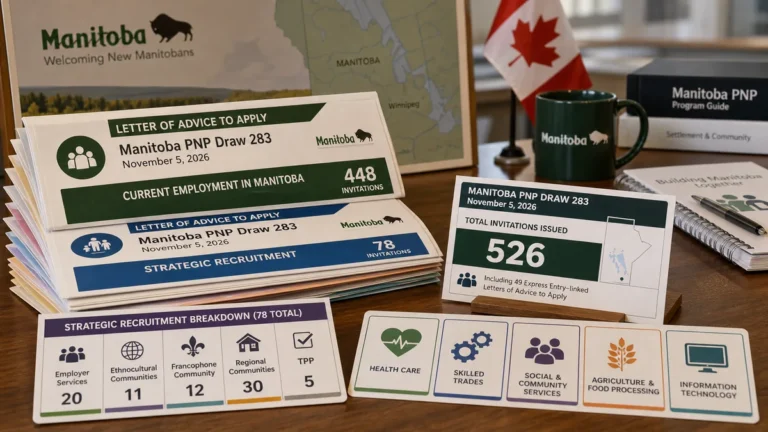
Manitoba PNP Draw 283 Issues 526 Invitations Nov. 5, 2026
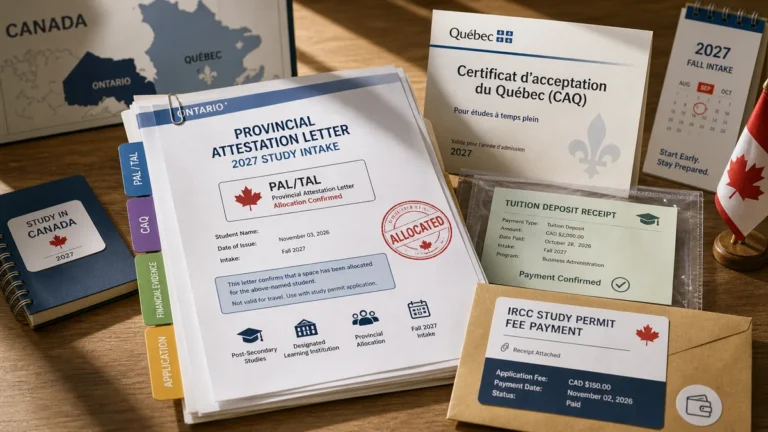
Apply for Canada Study Permit 2027
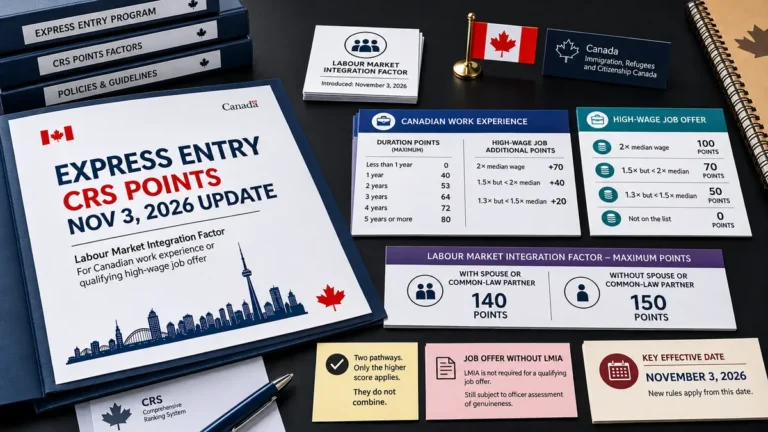
CRS Points Express Entry: November 3 Changes
Haiti Open Work Permit Renewals Policy
Sudan Open Work Permit Renewal Policy in Canada

Canada Immigration Processing Times on 1 November 2026

BC PNP Skills Draw Issues 772 ITAs on October 29, 2026

IRCC Changes LMIA Concurrent Processing
Express Entry Draw 453 Transport on October 28, 2026