
A Refugee PR Refusal Over Credibility has been set aside after the Federal Court found that a visa officer misunderstood a Somali applicant’s claim and breached procedural fairness. The permanent residence application will be reconsidered by a different officer.

Case Summary
- Case & citation: Afrah v. Canada (Citizenship and Immigration), 2026 FC 1391, Court file IMM-22810-24.
- Decision date & judge: November 12, 2026, by the Honourable Madam Justice Blackhawk.
- Issue: The Court reviewed the refusal of a Convention Refugee Abroad Class permanent residence application based on credibility concerns.
- Outcome: Judicial review was granted, the refusal was quashed and the matter was returned to a different officer for redetermination.
Refugee PR refusal over credibility: Court’s reasoning
The applicant, a Somali citizen living in Uganda, had been found by Ugandan authorities to be a member of the Convention refugee class. He applied for permanent residence from outside Canada and was interviewed in Kampala with an interpreter.
The officer refused the application after identifying discrepancies between the applicant’s testimony and his application. The applicant argued that the officer had misunderstood the nature of his claim concerning threats from Al Shabaab.
Justice Blackhawk agreed. The Court found that the applicant’s Schedule 2 narrative described his work as a manager at a Mogadishu hotel frequented by Somali government members, parliamentarians and ministers, as well as bomb threats directed at the hotel.
The Court concluded that the officer did not understand the applicant’s central allegation: that Al Shabaab targeted him to obtain information about high-profile guests and potential targets. Without an interview transcript, the officer’s notes were insufficient to establish that the applicant had advanced a materially different explanation of his risk.
The reasons also did not engage with other parts of the claim, including alleged threats by text and telephone, a small explosion in the hotel’s back yard and a visit to the applicant’s home. The Court held that the resulting credibility findings were not transparent, justified or intelligible.
Country-condition evidence was admitted
The applicant filed new country-condition evidence on judicial review to challenge the officer’s statement that Mogadishu was controlled by the government rather than Al Shabaab. The respondent opposed its admission, arguing that judicial review is generally limited to the record before the original decision-maker.
The Court accepted the evidence under limited exceptions to that general rule. It found that the material provided background information, assisted the Court in understanding the issues and highlighted defects in the evidentiary record.
Although officers may be presumed to have general knowledge of country conditions, the Court found it unclear which open-source materials the officer had consulted. The new evidence indicated conflicting information about conditions in Mogadishu, which the officer had not addressed.
Interview record did not show procedural fairness
The Court also found a breach of procedural fairness. The officer’s GCMS notes stated that procedural fairness had been provided during the interview, but did not identify the follow-up questions asked, the concerns put to the applicant or why his answers did not resolve them.
Justice Blackhawk did not find that procedural fairness required a letter in these circumstances. However, the available record did not show that the applicant knew the case he had to meet or had a full and fair opportunity to respond to the officer’s concerns.
What the judgment means
The Federal Court did not grant the applicant permanent residence. It ordered a new assessment by a different officer.
The decision is specific to this record. It underscores that where a refusal turns on credibility, the reasons and interview record must show that the officer understood the claim and gave the applicant a fair opportunity to address material concerns.
Source: Federal Court Decisions
Maplevisa provides Canadian immigration news and information for general informational purposes only. Content is not legal or immigration advice and should not be relied upon as a substitute for advice based on your individual circumstances. Immigration laws, policies, programs, and procedures may change. Where applicable, readers should consult the relevant official government or legal source for current information.
Disclaimer
Maplevisa provides Canadian immigration news and information for general informational purposes only. Content is not legal or immigration advice and should not be relied upon as a substitute for advice based on your individual circumstances. Immigration laws, policies, programs, and procedures may change. Where applicable, readers should consult the relevant official government or legal source for current information.
More Immigration News

Canada Named Safest Country for Travel in 2027

Job Bank wage update 2026 set for November 18
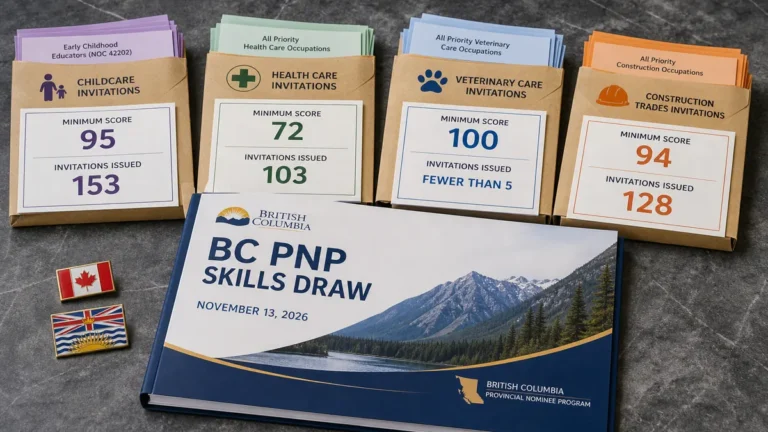
BC PNP Draw November 13, 2026: 384+ Invitations Issued

Newfoundland and Labrador Issues 38 NLPNP & AIP Invitations
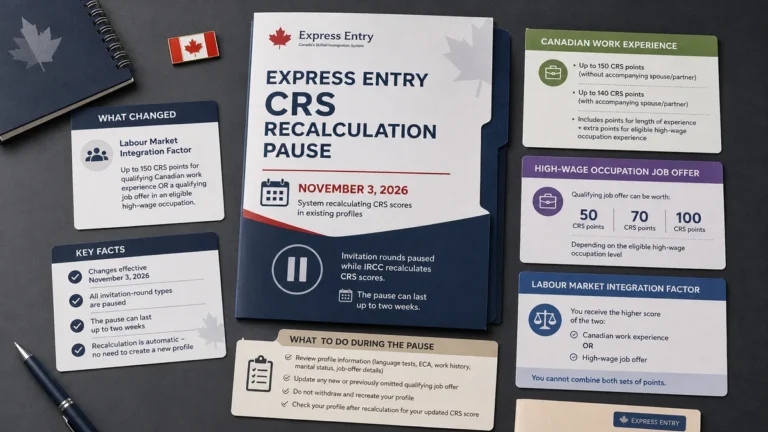
Express Entry Draws Paused for CRS Recalculation
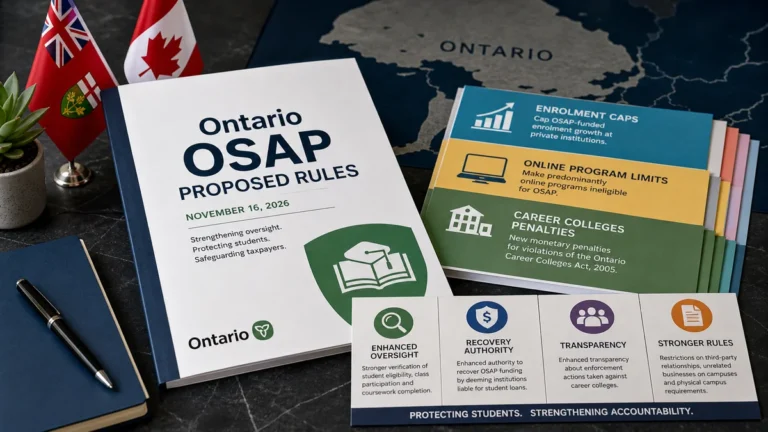
Ontario proposes OSAP rules for private institutions

Start-Up Visa Priority Processing: IRCC’s 3 Tiers

Alberta AAIP Issues 525 Invitations in 6 Rounds

Canada Immigration Announcement on November 12, 2026