
The Federal Court set aside a refugee refusal involving an internal flight alternative (IFA) in Mexico. The Refugee Appeal Division (RAD) had not addressed evidence of a cartel inquiry in a different state, a detail central to assessing continued motivation to pursue the applicants. A different decision-maker must reassess the matter.
Case Summary
- Case & citation: Vazquez v. Canada (Citizenship and Immigration), 2026 FC 1433, Court file IMM-4840-25.
- Issue: The applicants challenged the RAD’s finding that they had a safe internal flight alternative elsewhere in Mexico.
- Outcome: Judicial review was allowed; the February 11, 2025 RAD decision was set aside and sent back for redetermination by a different decision-maker.
- Decision date & judge: November 20, 2026, Madam Justice Sadrehashemi.
Internal Flight Alternative refugee claim analysis
The applicants sought refugee protection based on their fear that Mexican police could not protect them from cartel threats and violence. The Refugee Protection Division refused the claims, and the Refugee Appeal Division (RAD) dismissed their appeal after finding they could safely and reasonably relocate elsewhere in Mexico.
Before the Federal Court, the applicants challenged only the first part of the RAD’s internal flight alternative (IFA) analysis: whether the cartel would still be motivated to pursue them in another region. The Court reviewed that issue on the reasonableness standard.
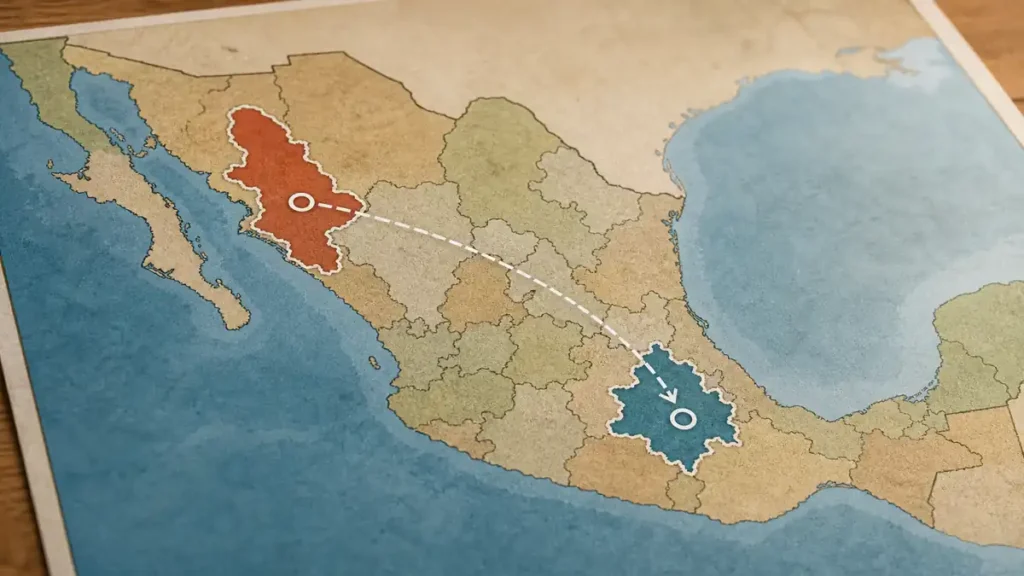
The RAD had accepted evidence that armed cartel members went to the applicants’ aunt’s home in December 2023 and asked about their whereabouts. However, the Court found that the RAD did not address the fact that the aunt lived in another state, hundreds of kilometres from the applicants’ home region.
Justice Sadrehashemi held that this was central to the issue of whether the cartel had the motivation to track the applicants elsewhere in Mexico. At paragraph 12, the Court found that the omission affected the decision’s intelligibility, transparency and justification.
The Court did not decide whether an IFA would ultimately be safe or reasonable for the applicants. Instead, it set aside the RAD decision for a new assessment by a different decision-maker.
One-day filing extension
The parties disputed whether the applicants had filed their leave and judicial review application on time. If an extension was required, they agreed it would be for one day.
The Court found it unnecessary to decide whether an extension request was technically needed. It held that, if required, a one-day extension should be granted because the delay was minor, the respondent identified no specific prejudice, the case had merit and the matter was consequential to the applicants’ protection claims.
Practical Implications for Lawyers and RCICs
For a comparable internal flight alternative (IFA) record, the practical focus is whether the reasons engage with refugee claim evidence of continued pursuit, not simply whether the decision mentions that evidence.
- Location of later inquiries: Identify where the events occurred and explain their relevance to the alleged persecutor’s motivation. The aunt’s location in another state was central here (paras 10–12).
- Ground of review: Connect the alleged omission to the reasons and submissions. This was reasonableness review; the applicants did not raise procedural fairness arguments (paras 7, 11–12).
- Limits of the remedy: Redetermination by a different decision-maker does not establish that no viable IFA exists or grant refugee protection.
Source: Federal Court of Canada – Vazquez v. Canada (2026 FC 1433)
Maplevisa provides Canadian immigration news and information for general informational purposes only. Content is not legal or immigration advice and should not be relied upon as a substitute for advice based on your individual circumstances. Immigration laws, policies, programs, and procedures may change. Where applicable, readers should consult the relevant official government or legal source for current information.