The Federal Court dismissed a family’s challenge to the refusal of its humanitarian and compassionate permanent residence application, finding the officer’s H&C best interests assessment was reasonable. The Court found the officer reasonably weighed the limited evidence concerning the children’s health, schooling and support networks.

Case Summary
- Case & citation: Khan v. Canada (Citizenship and Immigration), 2026 FC 1324, Court file IMM-21545-24.
- Decision date & judge: October 28, 2026, by The Honourable Mr. Justice A. Grant.
- Issue: The applicants challenged the refusal of their H&C permanent residence application, including the assessment of the children’s best interests and the family’s establishment in Canada.
- Outcome: The application for judicial review was dismissed; there was no certified question and no costs.
Family challenged H&C refusal
The applicants were a Pakistani family of six who arrived in Canada in January 2020. They had previously made unsuccessful refugee protection and pre-removal risk assessment applications before seeking permanent residence on humanitarian and compassionate (H&C) grounds.
Their submissions included evidence of the father’s work at Amazon, community support letters, the children’s school progress, and concerns about conditions in Pakistan. They also raised concerns about one child’s counselling, possible educational needs and cardiology treatment.
The IRCC officer gave moderate positive weight to the family’s establishment and to the children’s best interests. However, the officer found the evidence did not justify H&C relief, including because the asserted hardship in Pakistan was not sufficiently particularized and the medical evidence lacked detail.
Court finds best-interests analysis reasonable
The parties agreed that the reasonableness standard applied. Justice Grant said the Court’s role was to assess whether the decision was justified in light of the factual and legal constraints, rather than reweigh the evidence before the officer.
The family argued that the officer used the wrong approach to the best interests of the children. The Court said the officer had not expressly structured the analysis using the three-step approach discussed in Williams, which Justice Grant described as preferable, but the officer was not rigidly required to use that framework.
The Court found the officer considered the children’s school participation, social and academic ties in Canada, health concerns and extended family in Pakistan. While the officer referred to the children’s basic necessities being met in Pakistan, the Court concluded this was not treated as a complete answer to the best-interests question.
Justice Grant found that the officer was alert, alive and sensitive to the children’s interests on the record before them. The Court also noted that the applicants retained the burden of presenting sufficient evidence to support a positive H&C decision.
Limited medical evidence distinguished from Kanthasamy
The applicants argued that the officer mishandled evidence about DK’s health needs. They relied on Kanthasamy, where the Supreme Court considered an accepted psychological diagnosis and evidence that the person’s condition would deteriorate if removed from Canada.
Justice Grant found the record in Khan was materially different. The evidence consisted mainly of the parents’ statements in application materials and a brief counsellor’s letter confirming that DK had attended counselling for a period. There was no medical diagnosis, substantive description of symptoms, or clear evidence linking removal to deterioration of a condition.
The Court held that the officer responsively weighed the limited evidence available. It also found the applicants’ disagreement with the officer’s conclusions about the availability of medical care in Pakistan was, in substance, a request to reweigh the country-condition evidence.
Establishment findings did not justify intervention
The Court also rejected the family’s arguments about establishment in Canada. Justice Grant found that the officer’s description of their establishment as “expected” was a descriptor of the moderate positive weight assigned to that factor, rather than the application of an improper requirement for extraordinary circumstances.
The officer’s references to relatives in Pakistan did not make the decision unreasonable on this record, the Court found. The application disclosed family members in Pakistan but contained little evidence that their support would not be available.
The Court similarly found it was open to the officer to conclude that the family’s Canadian community relationships were not so interdependent as to require H&C relief. The officer’s reference to maintaining contact through communication technology formed part of that finding.
What the decision means
This judgment does not grant the family permanent residence or require a new H&C assessment. It leaves the officer’s refusal in place.
The decision turns on the evidence in this particular record. It illustrates that, in an H&C application, detailed evidence may be important where applicants rely on a child’s medical needs, the effect of removal, or the availability of support and treatment in another country.
Source: Federal Court Decisions
Disclaimer
Maplevisa provides Canadian immigration news and information for general informational purposes only. Content is not legal or immigration advice and should not be relied upon as a substitute for advice based on your individual circumstances. Immigration laws, policies, programs, and procedures may change. Where applicable, readers should consult the relevant official government or legal source for current information.
More Immigration News

Canada Immigration Processing Times on 1 November 2026

BC PNP Skills Draw Issues 772 ITAs on October 29, 2026

IRCC Changes LMIA Concurrent Processing
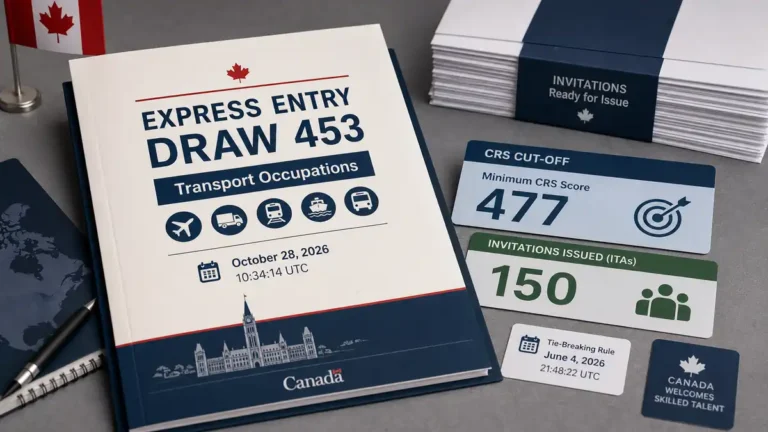
Express Entry Draw 453 Transport on October 28, 2026
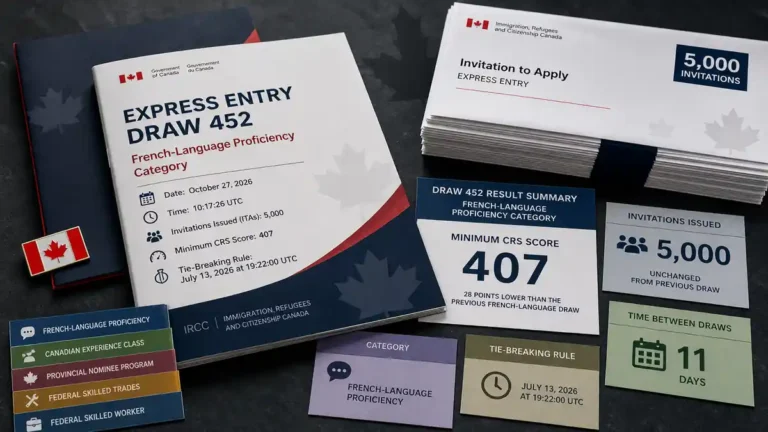
Express Entry Draw 452 French-Language on October 27, 2026
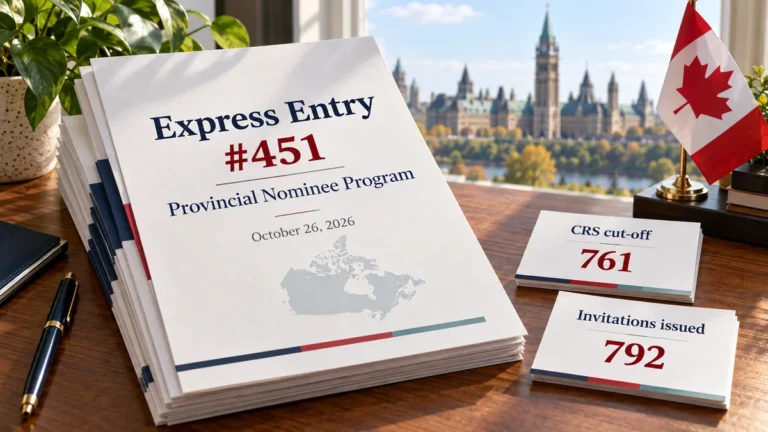
Express Entry Draw 451 PNP on October 26, 2026

Alberta AAIP draws: five rounds, October 9–20, 2026

List High-Wage Occupations for Express Entry

Manitoba PNP invites 1,304 candidates in October 22, 2026 draw