The Federal Court has set aside an H&C refusal over prospective psychological hardship after finding that an IRCC officer did not meaningfully assess evidence of the applicant’s risk of developing a depressive disorder if returned to Romania. The permanent residence application will be reconsidered by a different officer.

Case Summary
- Case & citation: Suciu-Krausz v. Canada (Citizenship and Immigration), 2026 FC 1408; Court file IMM-2714-25.
- Decision date & judge: November 16, 2026, by the Honourable Justice D’Agostino.
- Issue: An IRCC officer refused the applicant’s permanent residence application on humanitarian and compassionate grounds, including her medical-considerations submissions.
- Outcome: Judicial review was granted, the refusal was set aside, and the matter was remitted to a different IRCC officer for redetermination.
Why the H&C Refusal Over Prospective Psychological Hardship Failed
The applicant challenged only the officer’s assessment of her mental health and hardship on return. Her clinical psychological report stated that she did not currently have a major mental illness, but identified a predisposition to a depressive disorder and significant risk factors for developing major depressive disorder if she returned to Romania to live alone with limited financial resources.
The Court found that the officer restricted the medical assessment to the applicant’s current health, functional capacity and access to treatment in Romania. This did not meaningfully assess the prospective hardship identified in the report, Justice D’Agostino held at paragraph 20.
The officer was entitled to give the report limited weight, particularly because its findings were conditional. However, the reasons did not explain how the future risk of deterioration was evaluated, or why the applicant’s current ability to manage daily activities and access medical care addressed that risk. The omission concerned a material part of the H&C submissions and made the decision unreasonable (paragraph 26).
Court rejects new justification for the officer’s reasons
The government submitted that the report could receive less weight because it was prepared in support of the H&C application. The Court rejected that submission because the officer had not identified concerns about advocacy or professional independence as a reason for the medical finding.
The Court said that the government could not provide a justification that the officer had not given. It also distinguished a previous case relied on by the government because that case involved a shortcoming in a psychological-evidence assessment that was not central to the decision; here, the psychological hardship was central to the applicant’s medical-considerations submissions (paragraphs 23–24).
Remedy and scope of the ruling
The Court applied the reasonableness standard to the H&C decision. It did not determine whether the applicant should receive permanent residence or H&C relief.
Instead, the January 2025 refusal was set aside and sent to a different IRCC officer for redetermination. The Court noted that the outcome could still remain unchanged, but the applicant was entitled to a reasonable assessment of the evidence on the record (paragraph 27).
Practical Implications for Lawyers and RCICs
The Court’s finding was specific to a report identifying a future mental-health risk under particular return conditions, rather than ordinary emotional consequences of removal. For a comparable H&C record, this suggests that reasons should demonstrate how an officer assessed the projected hardship identified in material psychological evidence, not only present functioning and treatment availability (paragraphs 20–22, 26).
Source: Federal Court Decisions
Maplevisa provides Canadian immigration news and information for general informational purposes only. Content is not legal or immigration advice and should not be relied upon as a substitute for advice based on your individual circumstances. Immigration laws, policies, programs, and procedures may change. Where applicable, readers should consult the relevant official government or legal source for current information.
Disclaimer
Maplevisa provides Canadian immigration news and information for general informational purposes only. Content is not legal or immigration advice and should not be relied upon as a substitute for advice based on your individual circumstances. Immigration laws, policies, programs, and procedures may change. Where applicable, readers should consult the relevant official government or legal source for current information.
More Immigration News
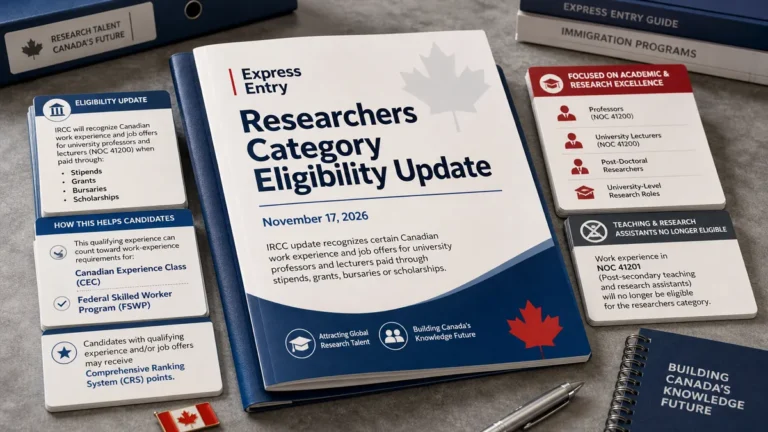
Express Entry researchers category eligibility updated
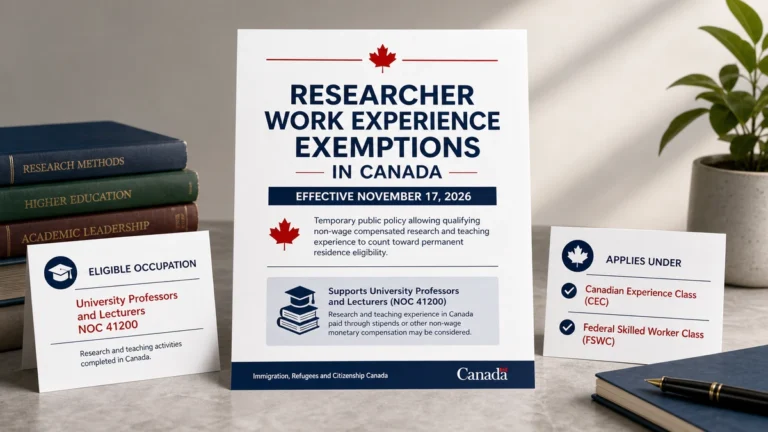
Researcher work experience exemptions in Canada

BC PNP Entrepreneur Draw, November 17, 2026

New Brunswick Reports 390 PNP Invitations and 73 AIP Selections
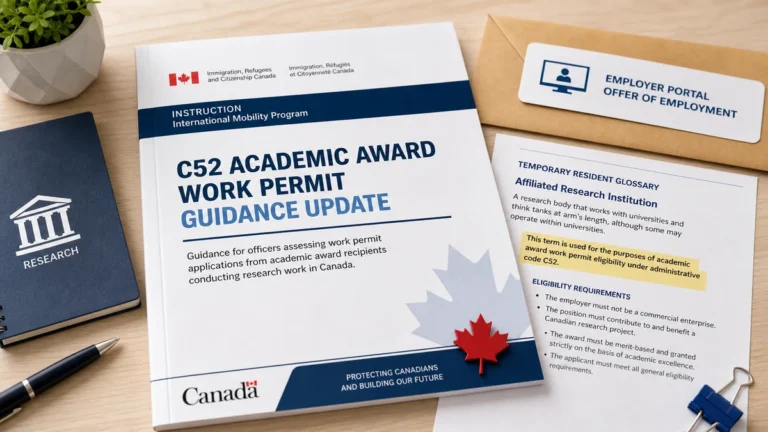
C52 academic award work permit guidance updated

Newfoundland and Labrador Issues 54 NLPNP & AIP Invitations

Canada Named Safest Country for Travel in 2027

Job Bank wage update 2026 set for November 18
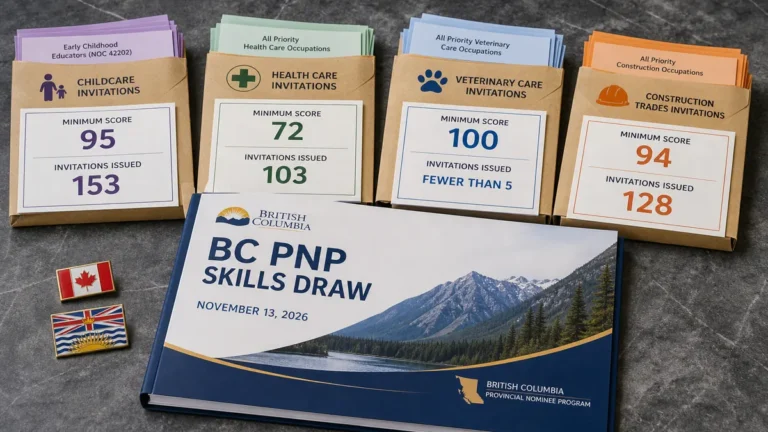
BC PNP Draw November 13, 2026: 384+ Invitations Issued