
The Federal Court dismissed a challenge to an Immigration and Refugee Board appeal decision finding that Colombian refugee claimants were excluded under Article 1E because they could obtain permanent residence in Argentina. The Article 1E Refugee Exclusion finding was reasonable even though the claimants had not previously applied for or held Argentine permanent residence.

Case Summary
- Case & citation: Floriano v. Canada (Citizenship and Immigration), 2026 CF 1315, court file IMM-15634-25.
- Decision date & judge: October 27, 2026.
- Issue: The applicants challenged the Refugee Appeal Division’s confirmation of their exclusion from refugee protection under Article 1E.
- Outcome: The judicial review application was dismissed, and no question was certified.
Argentine permanent residence was available
The applicants are Colombian citizens who sought refugee protection in Canada. Their initial refugee claim was denied on the basis that an internal flight alternative was available in Colombia.
On appeal, the Refugee Appeal Division found that the birth of the applicants’ son in Argentina gave them a right to permanent residence there. It returned the matter to the Refugee Protection Division to assess exclusion under Article 1E of the 1951 Refugee Convention.
Following a second hearing, the Refugee Protection Division excluded the applicants under Article 1E and section 98 of the Immigration and Refugee Protection Act. The Refugee Appeal Division upheld that result.
Applicants challenged the Article 1E finding
The applicants argued that they had been in Argentina only temporarily as students when their son was born. They later returned to Colombia, where they said they faced a personal risk from a cartel, before coming to Canada to make their refugee claim.
They submitted that they did not know Argentine law could allow them to obtain permanent residence through their son and had never been permanent residents there. They argued that this lack of knowledge meant they should not be viewed as seeking the most favourable asylum system.
The Court noted, however, that the applicants did not dispute that they could obtain permanent residence in Argentina at the time of their Refugee Protection Division hearing. Their counsel also confirmed at the judicial review hearing that Argentine permanent residence remained available.
Court finds RAD applied the proper test
The Court reviewed the Refugee Appeal Division decision on the reasonableness standard. It found that the applicants had misconstrued the framework from Zeng, which requires consideration of whether a person could obtain substantially similar status in a third country but did not do so.
The Court held that access to permanent residence in Argentina was determinative in the circumstances. It agreed that Article 1E is not limited to people who currently hold, or previously held, permanent resident status in a third country.
The Refugee Protection Division and Refugee Appeal Division had also considered whether the applicants would face a well-founded fear of persecution or a personal risk in Argentina. They found that they would not. The Federal Court concluded that the Refugee Appeal Division had considered the evidence and arguments and reasonably applied the relevant legal test.
Judicial review was dismissed
The Court found that the applicants were effectively asking it to reassess the evidence, which was not the Court’s role on judicial review. It therefore dismissed the application.
The judgment does not grant refugee protection or permanent residence in Argentina. It leaves in place the Refugee Appeal Division’s decision that the applicants are excluded from refugee protection in Canada under Article 1E.
Source: Federal Court Decisions
Disclaimer
Maplevisa provides Canadian immigration news and information for general informational purposes only. Content is not legal or immigration advice and should not be relied upon as a substitute for advice based on your individual circumstances. Immigration laws, policies, programs, and procedures may change. Where applicable, readers should consult the relevant official government or legal source for current information.
More Immigration News

BC PNP Skills Draw Issues 772 ITAs on October 29, 2026

IRCC Changes LMIA Concurrent Processing
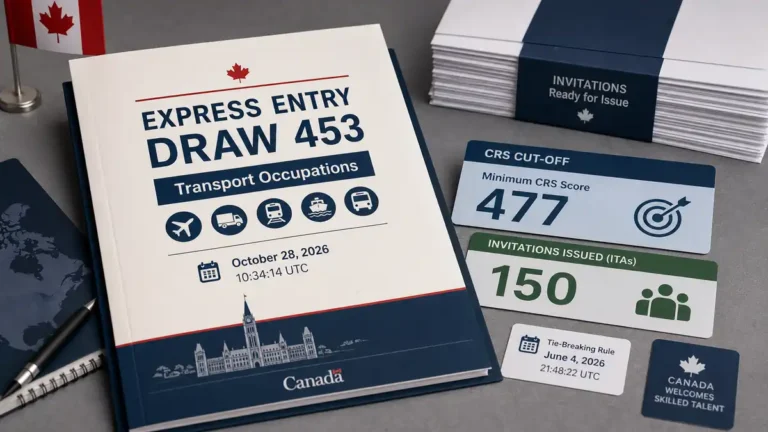
Express Entry Draw 453 Transport on October 28, 2026
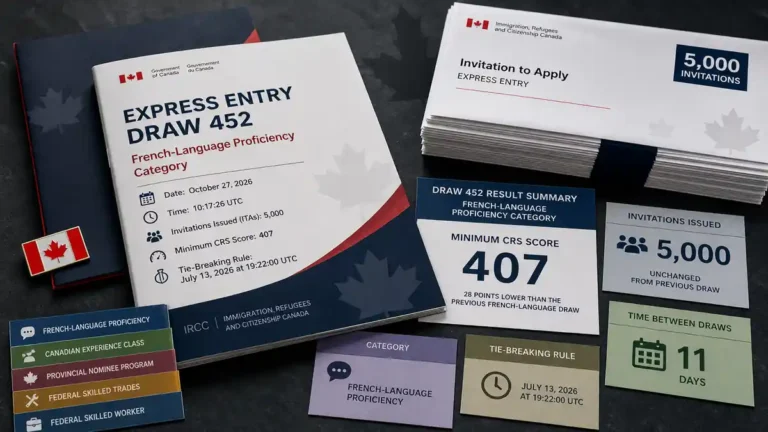
Express Entry Draw 452 French-Language on October 27, 2026
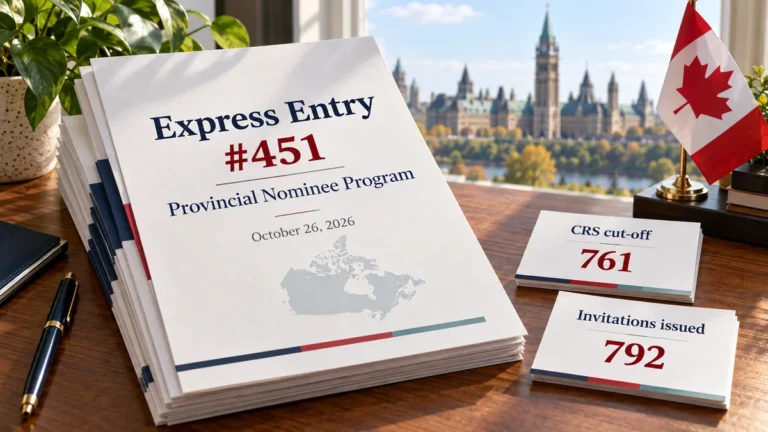
Express Entry Draw 451 PNP on October 26, 2026

Alberta AAIP draws: five rounds, October 9–20, 2026

List High-Wage Occupations for Express Entry

Manitoba PNP invites 1,304 candidates in October 22, 2026 draw

BC PNP Entrepreneur Draw, October 20, 2026