The Federal Court dismissed a Mexican refugee claimant’s judicial review application after finding the Refugee Appeal Division’s internal flight alternative analysis was reasonable. The Court held that the applicant had not shown a serious possibility of persecution in the proposed alternative location or that relocation there would be unreasonable.

Case Summary
- Case & citation: Herrera Ocana v. Canada (Citizenship and Immigration), 2026 FC 1328; Court file IMM-6912-25.
- Decision date & judge: October 29, 2026, by the Honourable Mr. Justice Roy.
- Issue: The applicant challenged the Refugee Appeal Division’s finding that she had an internal flight alternative in Mexico.
- Outcome: The judicial review application was dismissed, leaving the Refugee Appeal Division’s decision in place.
RAD found the claimant had not disproved an IFA
The Refugee Protection Division and the Refugee Appeal Division accepted, for the purposes of their analysis, the applicant’s account of mistreatment by a former partner in Mexico. The dispute instead concerned whether she could safely and reasonably relocate elsewhere in the country.
The applicant argued that her former partner was connected to the Cartel Jalisco Nueva Generacion and had located her when she previously attempted to flee to Cancun. She also believed he was responsible for the disappearance and death of her half-brother.
The RAD found that the evidence did not establish that the former partner belonged to, or was affiliated with, the cartel. It found the allegations about cartel ties and the half-brother’s death were speculative and did not demonstrate that the former partner had the means and motivation to find the applicant in the identified internal flight alternative.
Court applied reasonableness review
Justice Roy noted that the Federal Court’s role on judicial review was to assess the reasonableness of the RAD decision, rather than reassess the evidence or decide the refugee claim anew.
Under the internal flight alternative framework described in the judgment, once an IFA is raised, a claimant must show either a serious possibility of persecution in the proposed location or that it would be unreasonable to seek refuge there. The Court said the applicant had not identified a fundamental flaw in the RAD’s reasoning.
The Court accepted that the Cancun incident could show the former partner had been motivated to locate the applicant in 2023. However, it found the RAD reasonably considered the absence of evidence that he had tried to locate her or contact her family after her departure from Mexico.
Second part of IFA test was not pursued
The RAD had also concluded that relocation would not be unreasonable. It considered the applicant’s age, health, education and work experience, finding she could obtain employment and accommodation in the IFA.
Justice Roy observed that, apart from arguing that her former partner could find her, the applicant did not seek to establish in her written submissions or at the judicial review hearing that conditions in the IFA would be unreasonable under the applicable test.
The decision does not grant refugee protection or reconsider the merits of the claim. It dismisses the challenge to the RAD decision on the record before the Court.
Source: Federal Court Decisions
Disclaimer
Maplevisa provides Canadian immigration news and information for general informational purposes only. Content is not legal or immigration advice and should not be relied upon as a substitute for advice based on your individual circumstances. Immigration laws, policies, programs, and procedures may change. Where applicable, readers should consult the relevant official government or legal source for current information.
More Immigration News
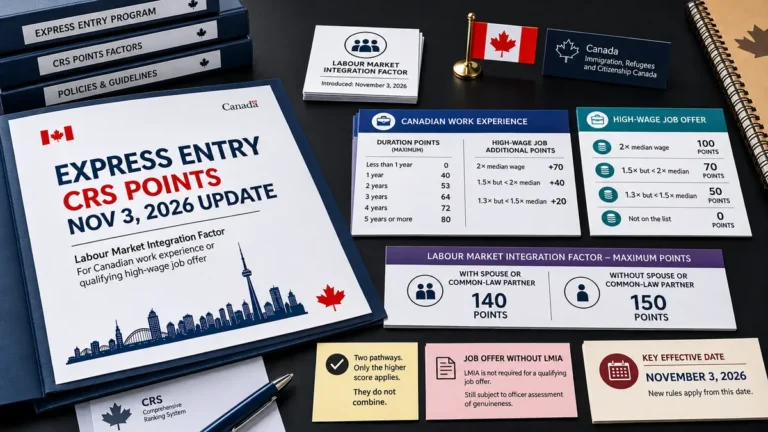
CRS Points Express Entry: November 3 Changes
Haiti Open Work Permit Renewals Policy
Sudan Open Work Permit Renewal Policy in Canada

Canada Immigration Processing Times on 1 November 2026

BC PNP Skills Draw Issues 772 ITAs on October 29, 2026

IRCC Changes LMIA Concurrent Processing
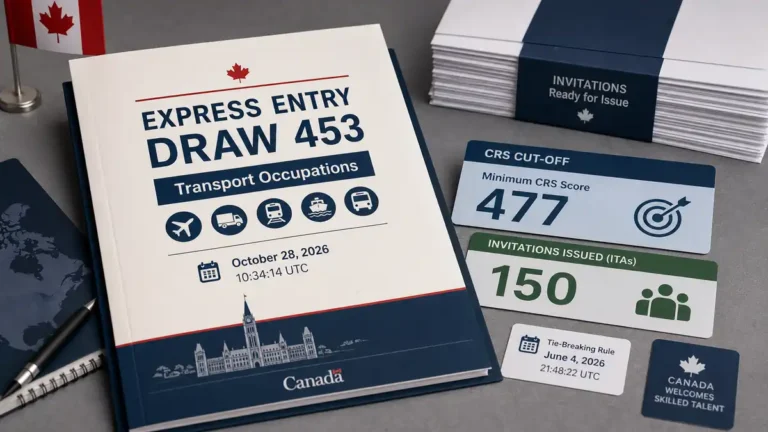
Express Entry Draw 453 Transport on October 28, 2026
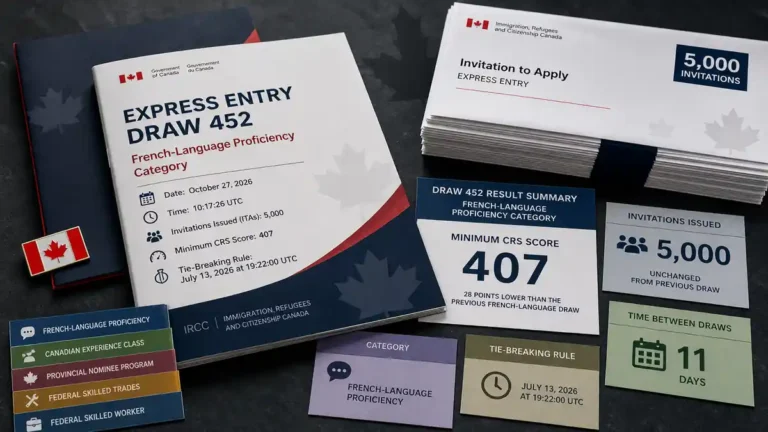
Express Entry Draw 452 French-Language on October 27, 2026
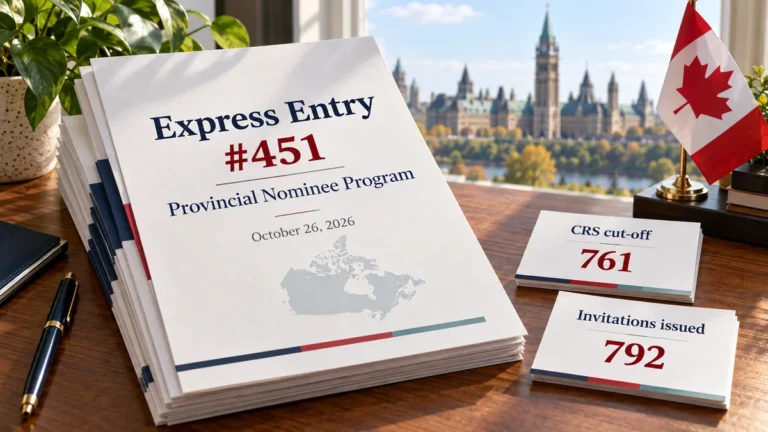
Express Entry Draw 451 PNP on October 26, 2026